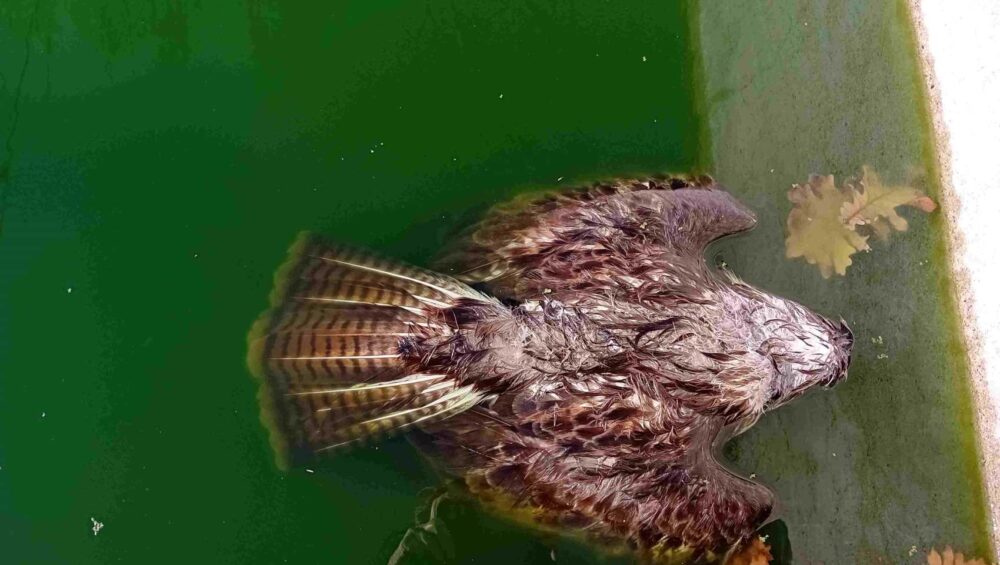
Animals drowning in water tanks in the forest
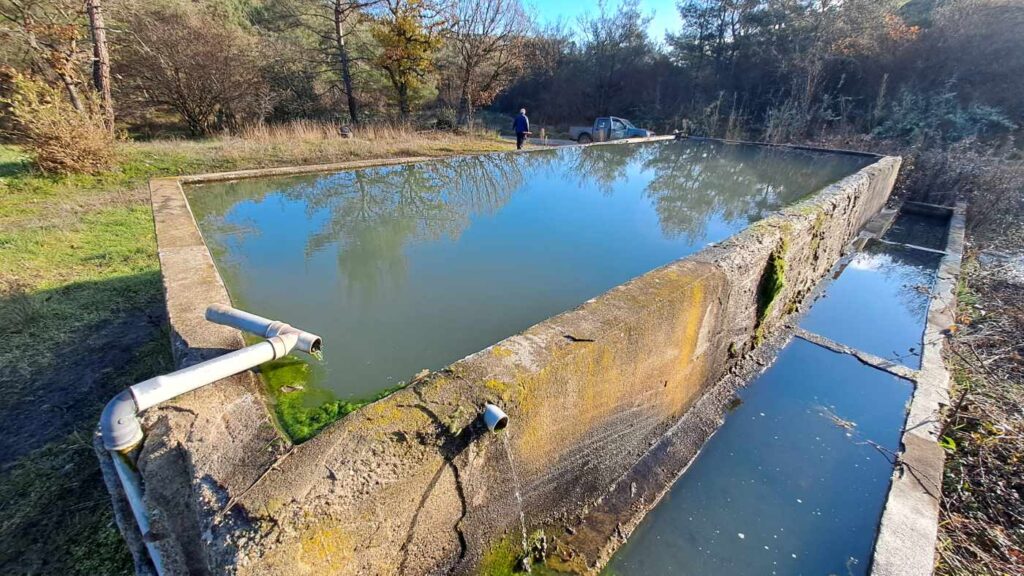
The concrete water tanks located at various points throughout the forest were built by the Forest Service many years ago, when forest firefighting was still the responsibility of the Forest Service—that is, well before 1998.
The water tanks were strategically placed throughout the forest to allow fire trucks to refill at any location where a forest fire broke out. Next to several of these reservoirs, watering troughs were built to help livestock farmers water their animals while they were grazing; wild animals and birds also found water there. The water in the reservoirs comes from the collection of natural forest springs, and the watering troughs are fed by overflow from the reservoirs.
Over the years, newer reservoirs have been built, but what we see today is that many water tanks either lose water through cracks, or are empty due to a lack of maintenance of the water supply system, or the spring has run dry, or they are filled only by rainwater. The gradual deterioration of this infrastructure is accompanied by a breakdown in coordination, initially with the Fire Service - the agency responsible for forest firefighting - and subsequently with livestock farmers.
On the one hand, the Fire Service prioritizes clean water sources for filling fire trucks, using a) high-capacity plastic tanks with the ability to connect a hose and quickly fill the fire truck’s tank; b) large-capacity fire trucks from which smaller fire trucks operating in the forest are filled; c) the red hydrants in villages connected to the water supply network d) water from boreholes pumped into a large, stationary water tanker next to the borehole, from which other fire trucks of various sizes are supplied. Thus, the typically dirty water from water tanks has not been used for firefighting for many years, except in exceptional cases.
On the other hand, livestock farmers have all but abandoned the profession, and following the recent smallpox outbreak, those who recently lost their animals due to mandatory culling may not return to farming. In the past, livestock farmers were also taking care of water tanks and troughs and had been pushing for their maintenance.
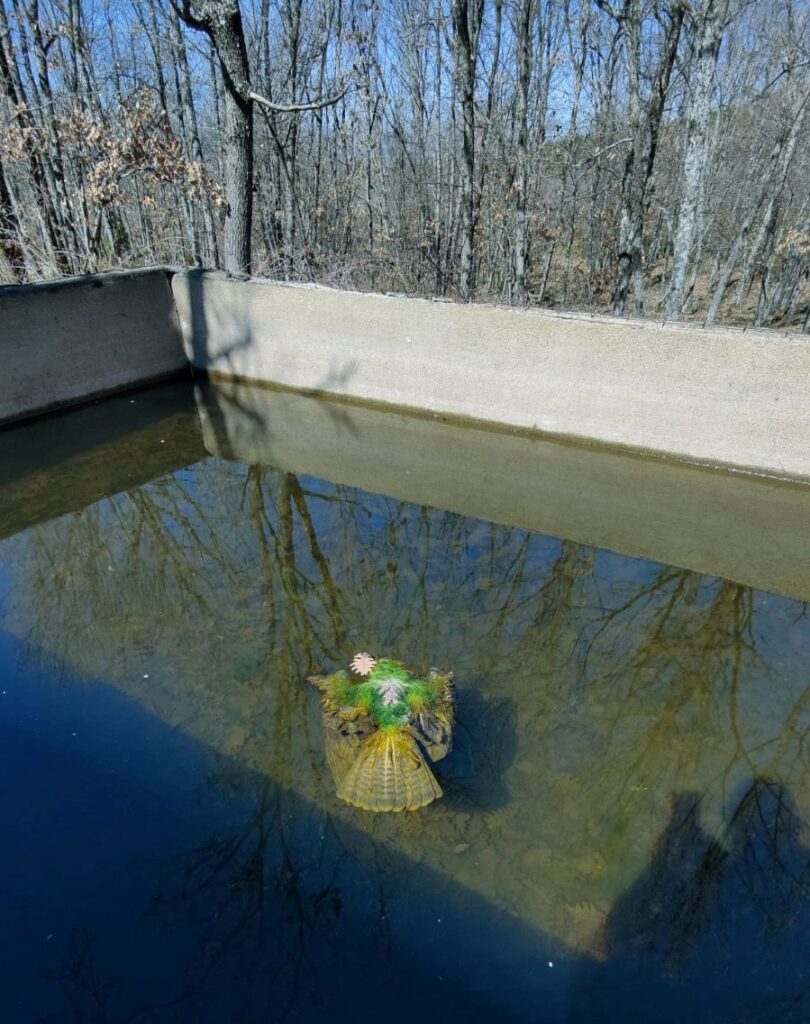
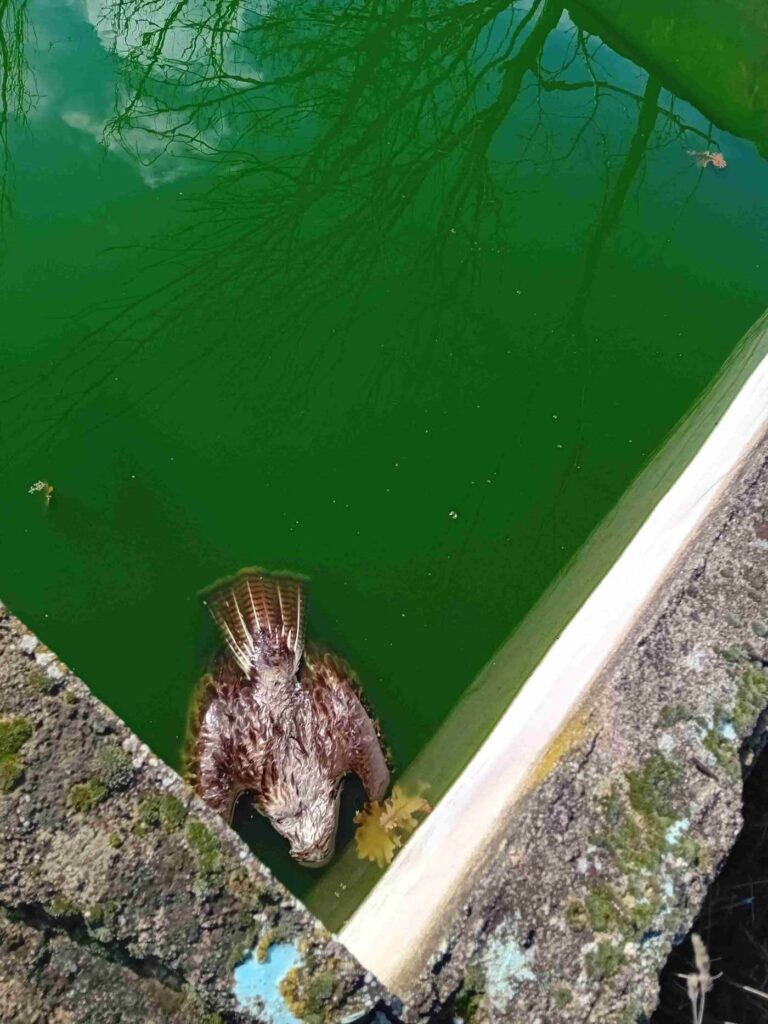
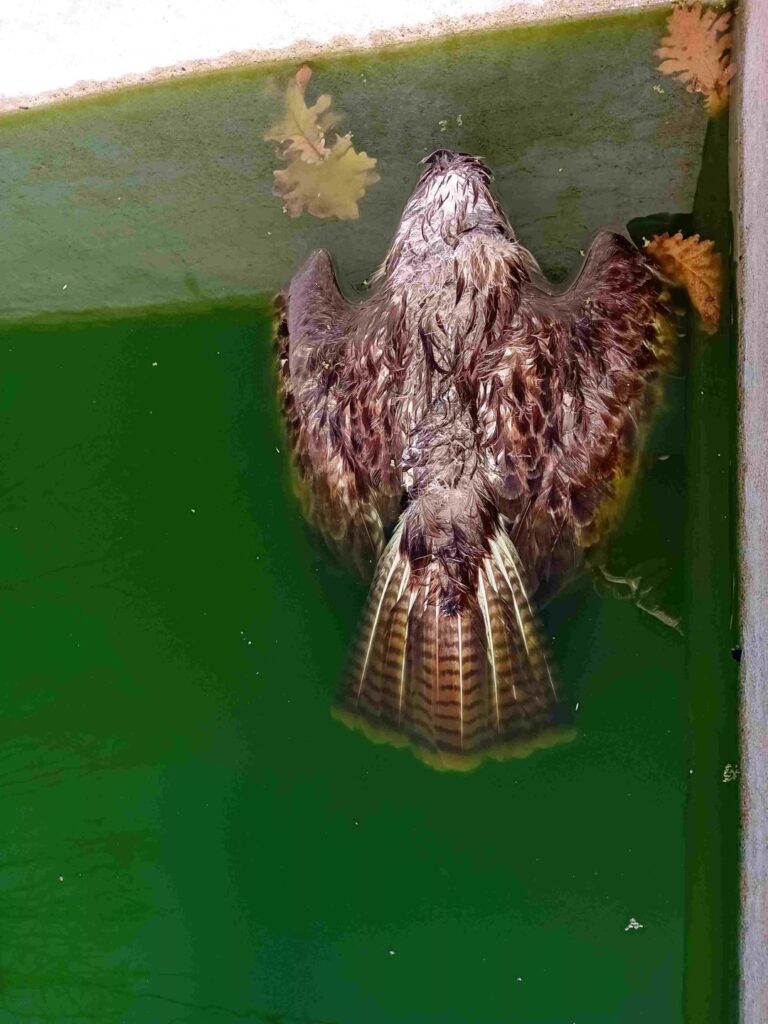
Reservoirs that are not filled to the brim year-round and whose water levels drop can become a trap for animals that, driven by thirst, will enter in search of water but, unfortunately, will be unable to get out. There has been no systematic record of how many animals may drown in the tanks; for example, in 2025, an inspection of approximately 45 tanks revealed dead animals (two whole buzzards and bird skulls or animal remains) in five reservoirs with low water levels. In the past, five cinereous vultures and one griffon vulture were found; due to their size and rarity, these were reported as incidents, while data for other species may be incomplete because they were likely not reported. There are also reports of drowning and companion animals such as dogs.
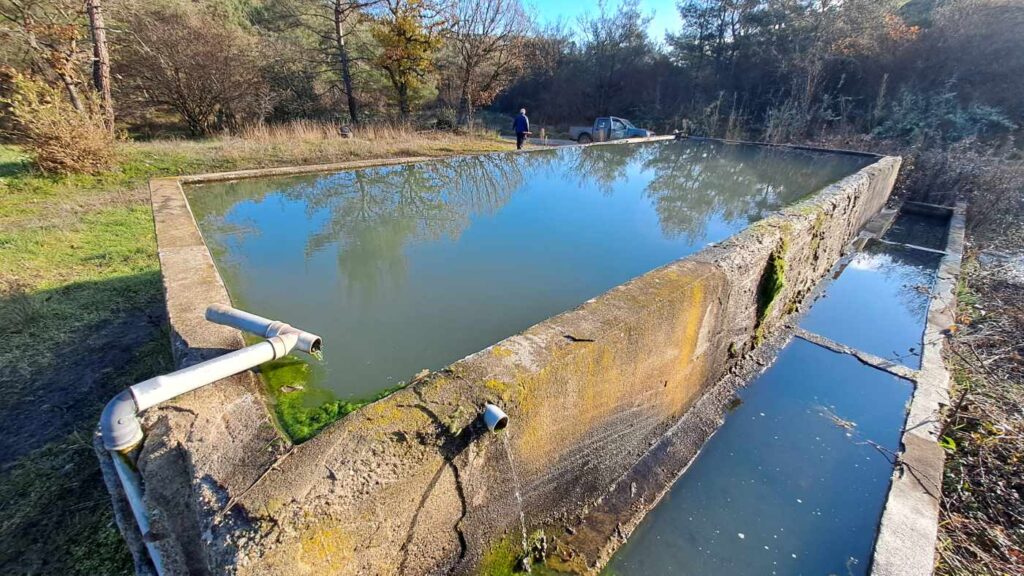
The abandonment of this infrastructure is a fact, and, indeed, maintaining it for firefighting purposes is no longer a strong incentive to incur expenses. However, these facilities remain in place for a long time, either empty or half filled. Furthermore, the water level in those that remain in operation may not remain filled to the brim year-round due to prolonged periods of drought.
What can be done to ensure that at least those tanks maintaining a low water level do not become drowning traps for animals? Should they be left open at all times so that water isn’t stored? That isn’t a good scenario, because water is important in the forest for wild animals, especially when streams dry up in the summer. They are also very useful for bees that need water sources, as well as for all species of pollinators that live in the forest. Therefore, for ecological reasons alone, they are worth preserving and serving as water sources in an increasingly arid forest environment. It’s a shame that the infrastructure, which was carefully built by the Forest Service, is being abandoned. The use of forest spring water has always been a human activity that connected people to this source of life, and from which animals naturally benefit as well. However, even if they are maintained, there is no guarantee that the water level will not drop at certain times.
This year, SPBT, in collaboration with the Forestry Service, will install animal escape ramps at those reservoirs where the water level is low or drops during certain months of the year. Whether they are maintained in the future or remain as they are, at least they will not pose a drowning hazard to animals. The installation of ramps could be included as a preventive measure in a future maintenance project for all of the forest’s water tanks, which would focus on their ecological value as a water source for wildlife.
The action is performed in the framework of the "Greek Wildlife Alliance" an initiative implemented with the support of WWF in cooperation with 11 Greek environmental NGOs with a common vision of the well-being of wildlife and humans.