Records of dead and injured birds and bats at wind turbines in Thrace
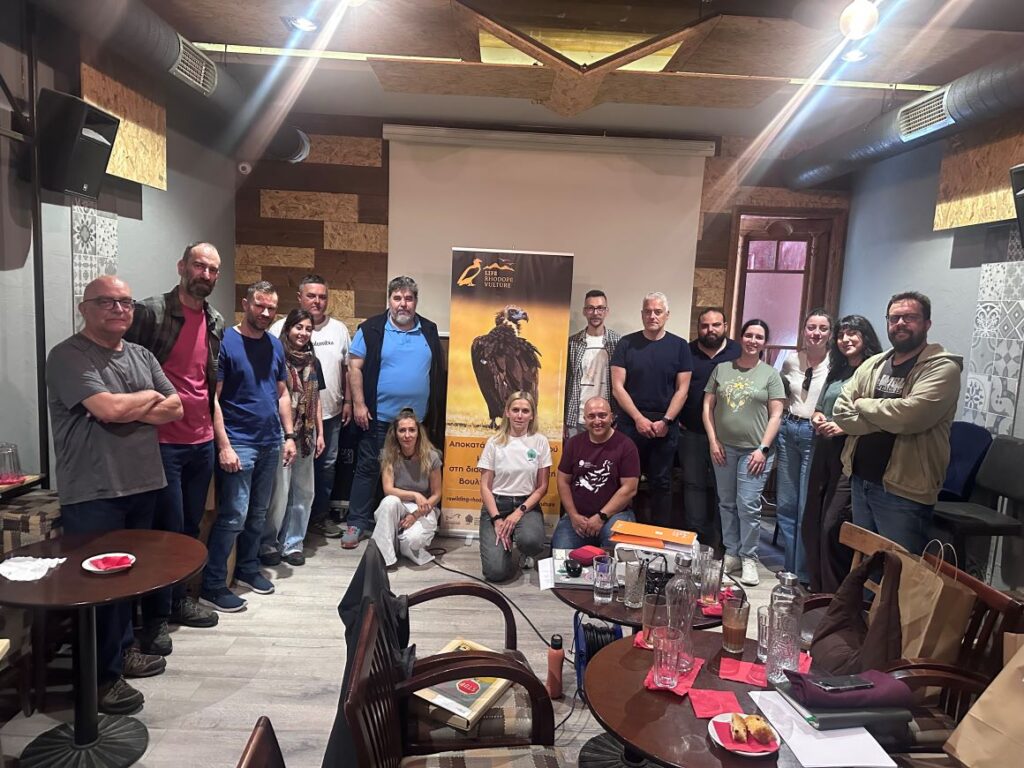
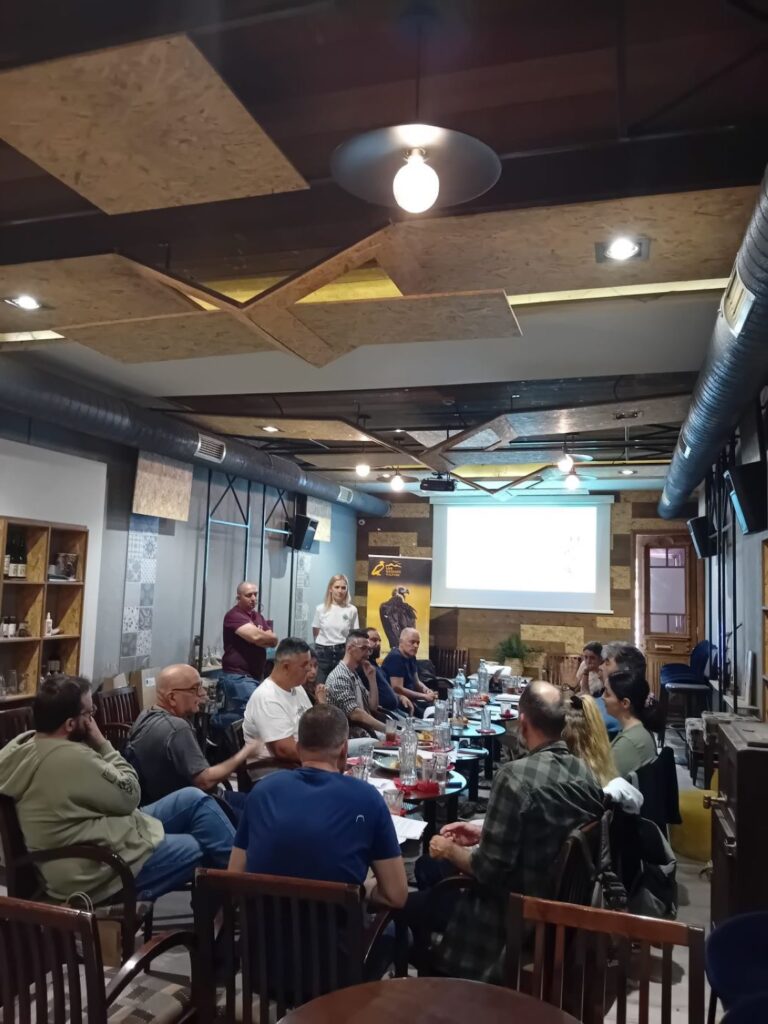
Workshop of the Society for the Protection of Biodiversity of Thrace with environmental impact assessment consultants for wind power plants in Thrace.
The Society for the Protection of Biodiversity of Thrace (SPBT) organized a two-day workshop in Soufli, Evros, in May 2026, with the participation of 14 consultants from different regions of Greece who are involved in the environmental impact assessment of wind farms in Thrace.
The aim of the workshop was to adress the challenges and difficulties faced by specialists when assessing the impacts of wind farms on wildlife, as well as to exchange experiences and explore ways to improve the methods currently being applied.
The key topic of the workshop was the presentation of the systematic research conducted by the SPBT since 2024 for the detection of dead birds and bats at wind power plants using a specially trained detection dog. The advantages of the method, its effectiveness, and its potential for broader application in monitoring the environmental impacts of wind turbines were presented.
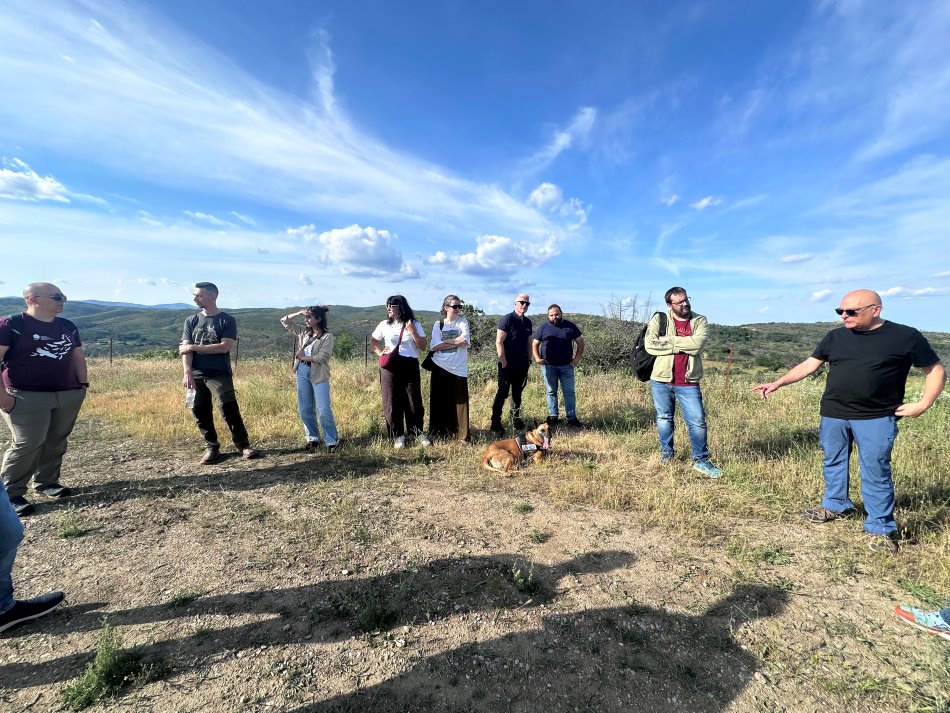
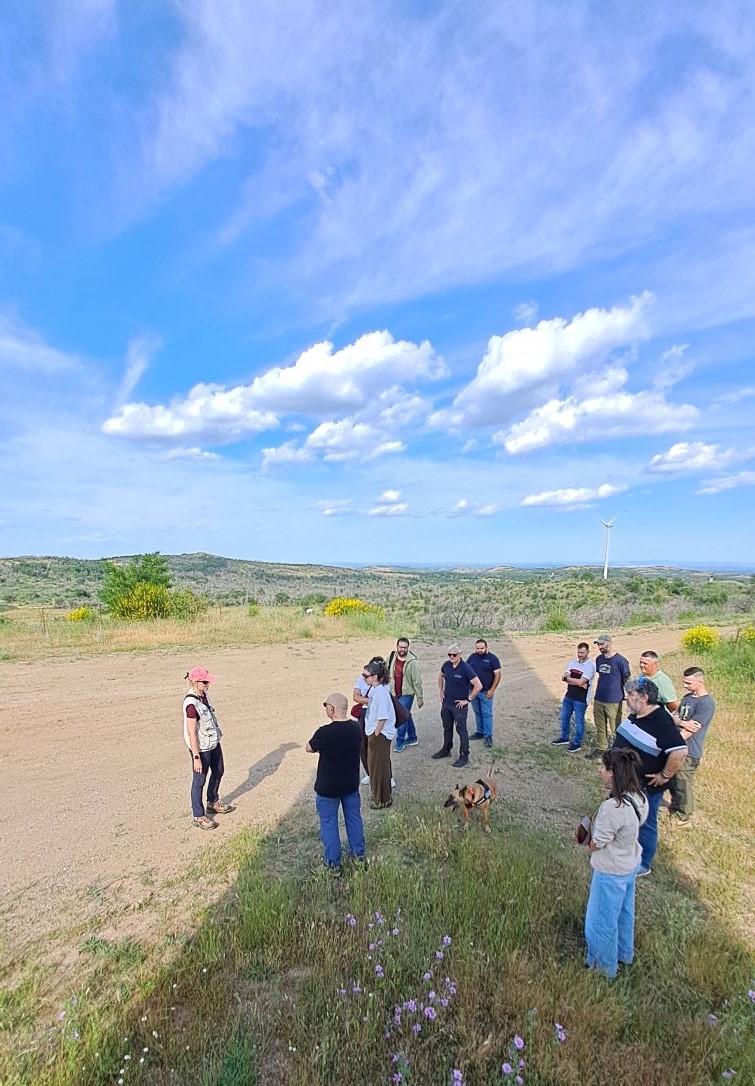
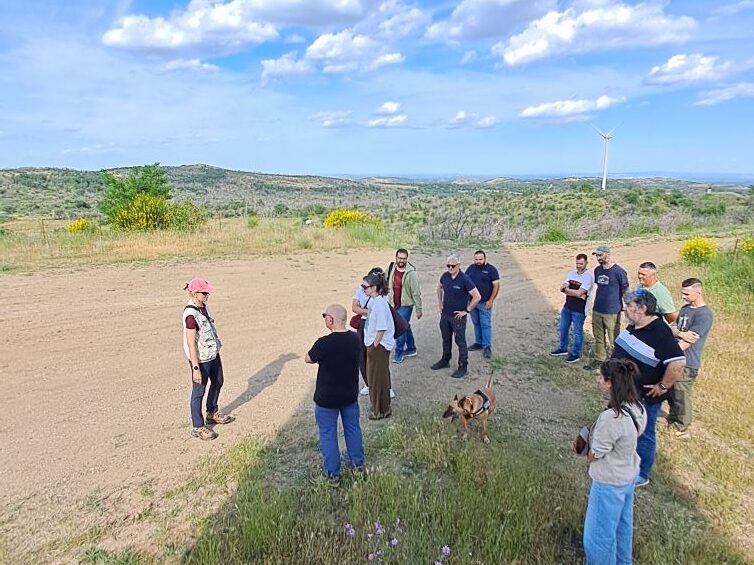
As part of the workshop, a field demonstration was also given at a wind farm in southern Evros, where the trained detection dog demonstrated in practice the rapid and efficient detection of findings.
During the discussions, it was highlighted that the detection of dead birds and bats at wind farms is a particularly demanding process. Dense vegetation, the considerable distance that animals may reach after a collision, the scavengers’ removal, as well as the limited f human observation ability, often make searches extremely difficult. For this reason, the use of trained detection dogs can significantly improve the accuracy of monitoring, contributing to a more reliable assessment of impacts and, consequently, to evidence-based decisions regarding changes in the operation and monitoring of existing wind farms, as well as future spatial planning.
The participants evaluated the method very positively, noting that, in addition to the advantages mentioned above, the use of a trained detection dog also offers the important benefit of rapid detection of findings, which is particularly valuable given the limited time that each consultant is able to dedicate to fieldwork.
At the same time, they emphasized the value of similar workshops, which strengthen the exchange of knowledge and experience and contribute to the continuous improvement of scientific monitoring methods.
The workshop was conducted within the framework of the European programme:
LIFE23-NAT-BG-LIFE Rhodope Vulture-101148254 «"Restoration of the Black Vulture population and its food chain in the Bulgaria-Greece cross-border area." With the contribution of the Green Fund.
We use cookies to give you the best possible experience on our site. If you continue to use the site, we will assume that you agree to this. Privacy policyΑΠΟΔΟΧΗΑπόρριψη
Privacy & Cookies Policy
Privacy Overview
This website uses cookies to improve your experience while you navigate through the website. Out of these, the cookies that are categorized as necessary are stored on your browser as they are essential for the working of basic functionalities of the website. We also use third-party cookies that help us analyze and understand how you use this website. These cookies will be stored in your browser only with your consent. You also have the option to opt-out of these cookies. But opting out of some of these cookies may affect your browsing experience.
Necessary cookies are absolutely essential for the website to function properly. These cookies ensure basic functionalities and security features of the website, anonymously.
Cookie
Duration
Description
cookielawinfo-checkbox-analytics
11 months
This cookie is set by the GDPR Cookie Consent plugin. The cookie is used to store the user consent for the cookies in the "Analytics" category.
cookielawinfo-checkbox-functional
11 months
The cookie is set by GDPR cookie consent to record the user consent for the cookies in the "Functional" category.
cookielawinfo-checkbox-necessary
11 months
This cookie is set by the GDPR Cookie Consent plugin. The cookies are used to store the user consent for the cookies in the "Necessary" category.
cookielawinfo-checkbox-others
11 months
This cookie is set by the GDPR Cookie Consent plugin. The cookie is used to store the user consent for the cookies in the category "Other.
cookielawinfo-checkbox-performance
11 months
This cookie is set by the GDPR Cookie Consent plugin. The cookie is used to store the user consent for the cookies in the "Performance" category.
viewed_cookie_policy
11 months
The cookie is set by the GDPR Cookie Consent plugin and is used to store whether or not the user has consented to the use of cookies. It does not store any personal data.
Functional cookies help to perform certain functionalities like sharing the content of the website on social media platforms, collect feedbacks, and other third-party features.
Performance cookies are used to understand and analyze the key performance indexes of the website which helps in delivering a better user experience for the visitors.
Analytical cookies are used to understand how visitors interact with the website. These cookies help provide information on metrics the number of visitors, bounce rate, traffic source, etc.
Advertisement cookies are used to provide visitors with relevant ads and marketing campaigns. These cookies track visitors across websites and collect information to provide customized ads.


 EN
EN  EL
EL