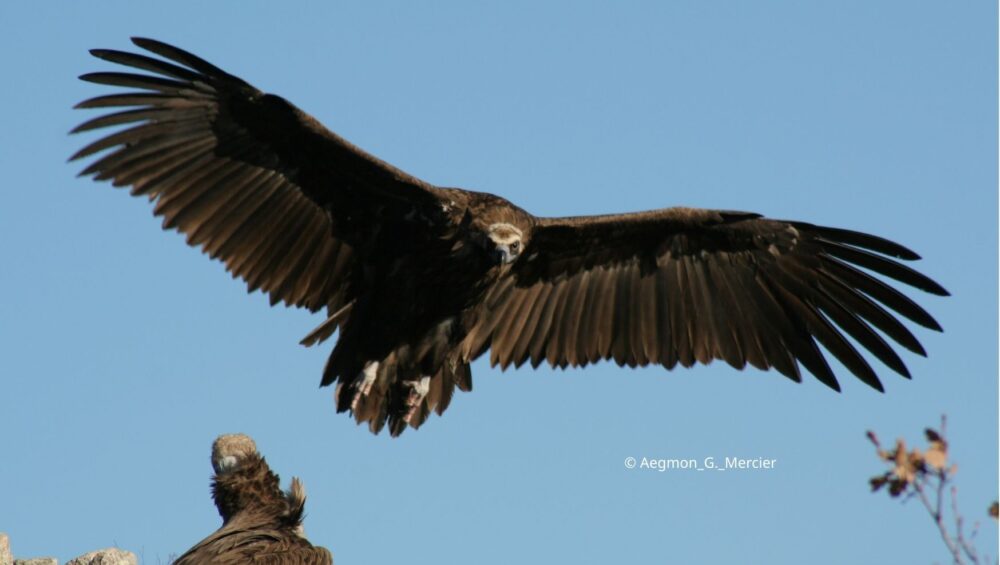
Wind turbines in Thrace, an insurmountable barrier for Cinereous Vultures!
"Green" energy at the cost of biodiversity?
A new study, published in the scientific journal Biological Conservation, once again highlights alarming findings regarding the population of the Cinereous Vulture. By analysing two decades of telemetry data (2004–2022), the study examined how the Cinereous Vulture population responds in an area where wind farms are steadily increasing. The researchers compared an earlier period (2004–2009), during which 185 wind turbines were operating in the Evros and Rhodope region, with a more recent period (2016–2022), during which 276 wind turbines are now operating within or adjacent to areas of the Natura 2000 network.
The findings of the study are particularly concerning:
- Displacement from critical habitats: The main finding of the study was clear: around most wind farms, spatial use decreased significantly, by almost 90% close to the turbines (within 200 meters radius).
- Change in flight behavior due to the "barrier" effect: The analysis of GPS telemetry data (2016–2021) demonstrated changes in flight behaviour. Specifically, after the wind turbines started operating, Cinereous Vultures crossed ridgelines covered with “clusters” of turbines less frequently, as if avoiding crossing a “barrier”. Within a 2 km radius of wind farms, the daily distance travelled and flight time were reduced. The latter indicates that the birds are forced to adjust their movements in order to avoid disturbance points, resulting in changes to their “traditional” foraging routes.
- Increased energy expenditure of Black Vultures: As a result of the above, and as wind turbines increase in the area, black vultures are forced to expend more energy.
- Risk of losing even more important areas for the species: The data analysis revealed zones of increased activity of the species, possibly important movement corridors, which overlap with a large number of wind turbines planned for installation in the future.
Why should we be concerned about the results??
The Evros and Rhodope regions are a typical example of non-proper wind turbine siting in Greece, with very serious impacts on threatened birds of prey, and particularly vultures, as many fatalities due to collisions with wind turbines have been recorded. Investment interest in installing hundreds more wind turbines remains particularly high, with most turbines planned in critical habitats for birds of prey. And although spatial use near wind turbines has decreased, the risk remains real, as Cinereous Vultures have not completely stopped flying near them, and even more so in areas where new wind farms are planned.
The displacement of the Cinereous Vulture, the “barrier” effect of wind turbines, and the expenditure of additional energy due to changes in their flight routes will undoubtedly have an impact on their viability. It is very likely that the areas from which the Cinereous Vulture is displaced are valuable feeding grounds, and this is important to be examined in a forthcoming study to be completed this year by the SPBT, as lack of food is a significant threat to its survival.
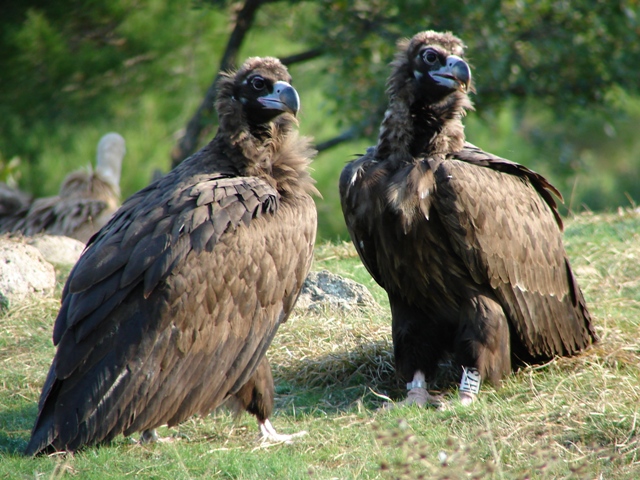
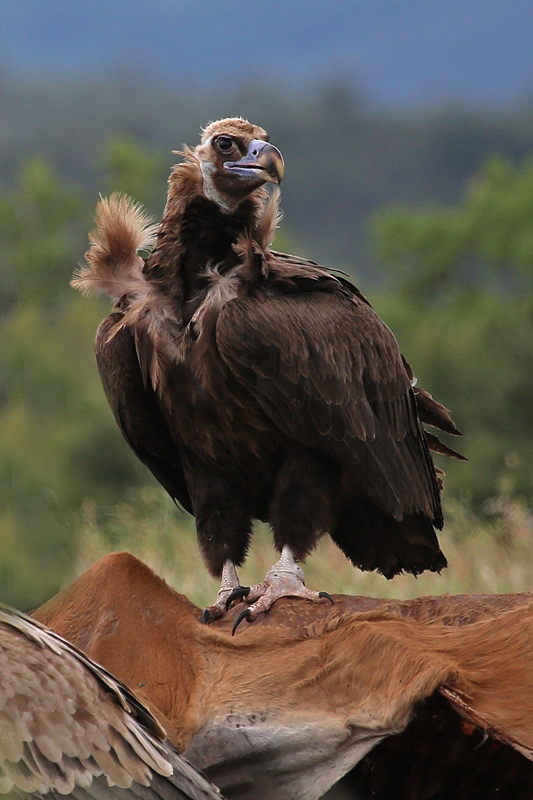
The Cinereous Vulture faces other serious threats, such as poisoned baits, power transmission lines and a lack of food and nesting trees due to fire. The loss of vital space due to wind farms adds further pressure that may prove fatal. The threat posed by wind farms is particularly alarming for a species that numbers only a few dozen breeding pairs in Greece, exclusively in the Evros region, and the population is therefore considered “fragile”.
Conclusion:
For the survival and conservation of protected species, the impacts of planned projects (especially wind farms) must not be assessed individually per project or small groups of projects, but cumulatively, taking into account all the projects operating and planned in the area as well as all the threats facing the species.
The full text of the study is available at https://spbt.gr/downloads/
The study was conducted within the framework of the "Greek Wildlife Alliance" an initiative implemented with the support of WWF WWF in cooperation with 11 Greek environmental NGOs with a common vision of the well-being of wildlife and humans.
 EN
EN  EL
EL