Rescue of a Cinereous Vulture in a Wetland of Thrace
Cinereous vultures, the imposing “lords” of the skies over the mountainous regions of Thrace, rarely fly close to the sea. For this reason, the appearance of a young cinereous vulture in a coastal area took us by surprise.
This bird was born in 2024 in Spain and was released just a few days ago in Bulgaria, as part of the cross-border LIFE Rhodope Vulture*in which the Society for the Protection of Biodiversity of Thrace (SPBT) participates as a partner.
Fortunately, the vulture was equipped with a transmitter, thanks to which colleagues from the Bulgarian Society for the Protection of BirdsBSPB)responsible for monitoring it, detected its unusual route and immediately informed their partners in Greece (Stavroupoli Forest Service, NECCA, and SPBT).
According to the transmitter data, the bird was weak, as it had not fed for several days. Last Thursday, it began moving from the mountainous area of Kompsatos down toward the lowlands until it eventually reached Lake Vistonida.
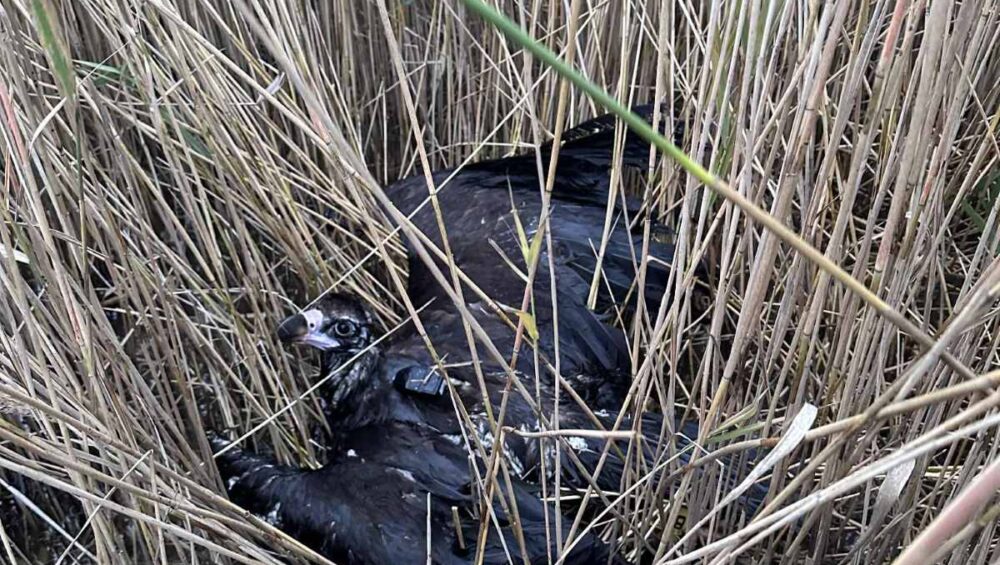
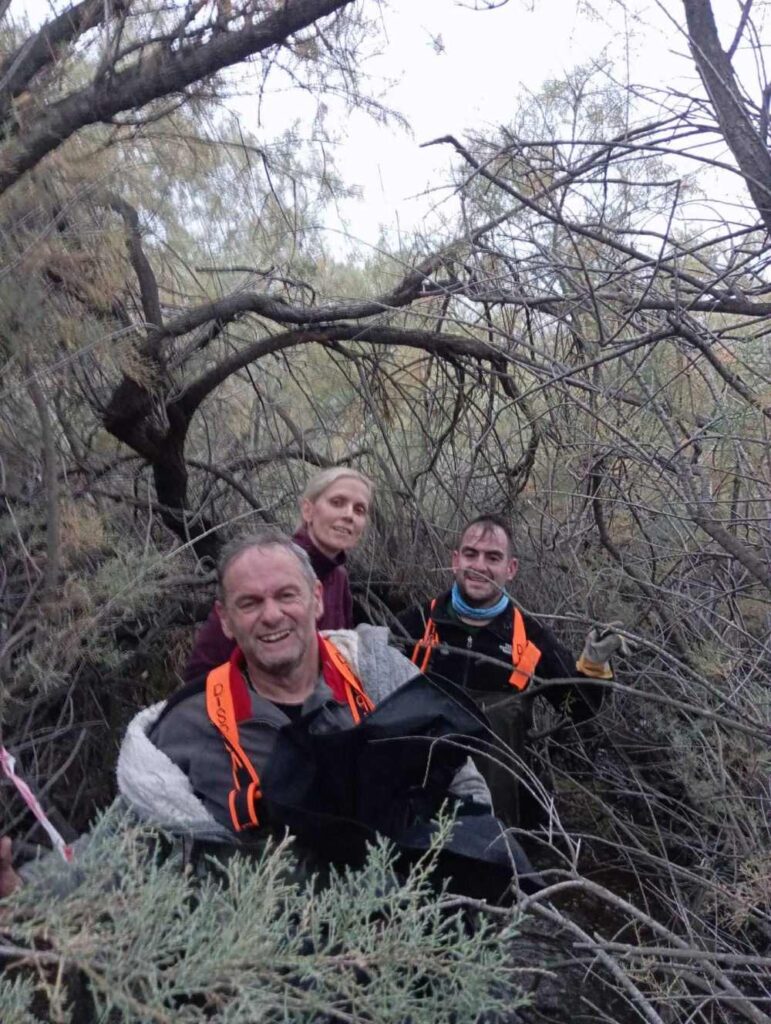
Staff from SPBT and NECCA rushed to the area, but the first attempt to capture the bird failed, as the young cinereous vulture managed to fly away. The next day, the team observed via the transmitter that the bird had moved and landed in a particularly dangerous spot by the lake, where it became trapped in dense vegetation.
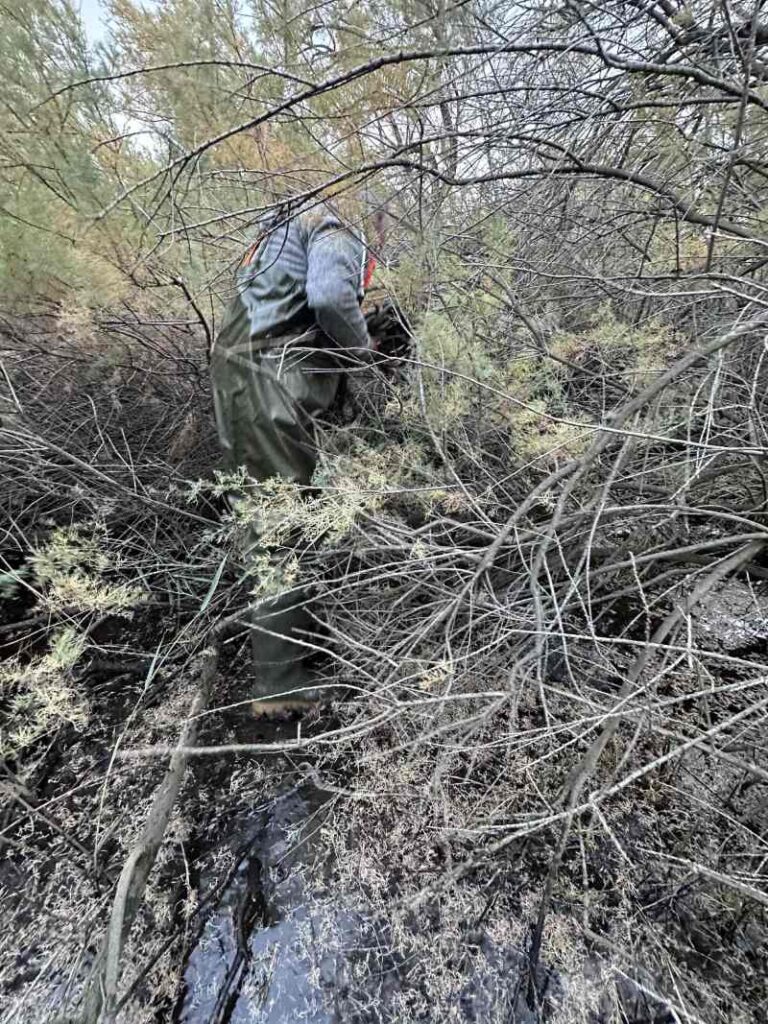
Members of the organization Petfriend Kavalaalso took part in the rescue operation, supporting the efforts of the SPBT and NECCA teams. Searching through swamp and towering reeds was literally like “looking for a needle in a haystack.” Nevertheless, the team succeeded and located the young vulture!
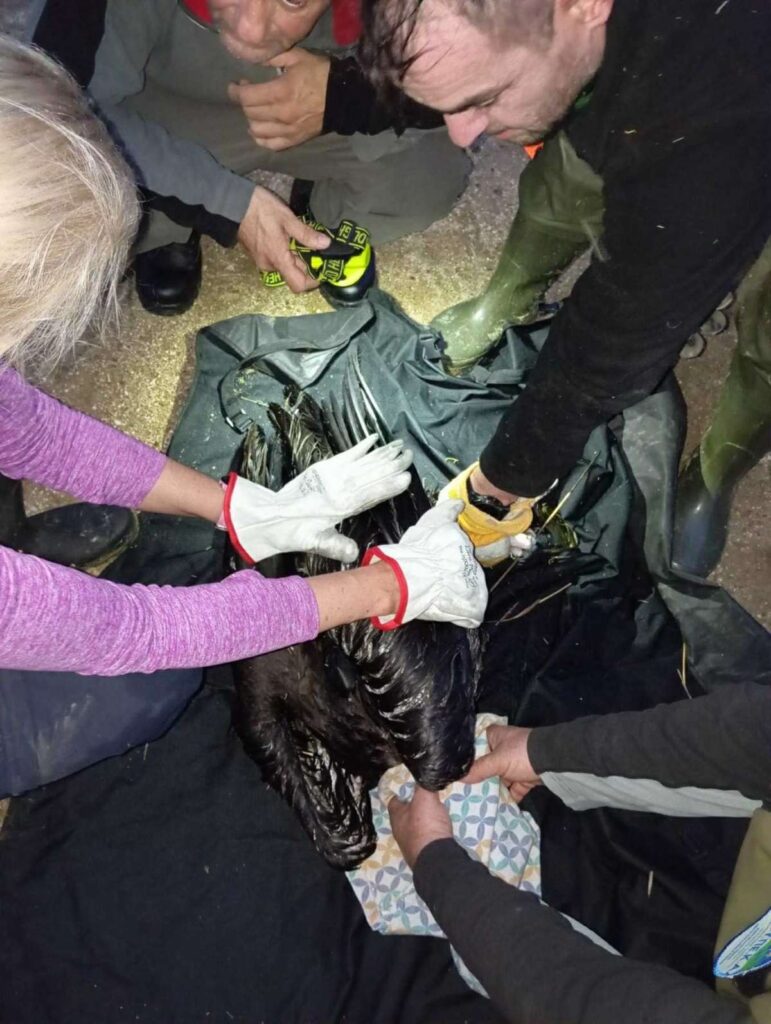
The bird had no external injuries and appeared active, though weakened. It was immediately transported to Alexandroupolis Airport and, with the assistance of Aegean Airlineswas flown free of charge to ΑΝΙΜΑ, Hellenic Wildlife Care Associationwhere it is receiving intensive care.
The first updates are encouraging: the vulture is recovering, feeding on its own, and appears to be regaining its strength. We hope it will soon return to the skies of Thrace!
The LIFE Program titled “Restoration of the Population of the Cinereous Vulture and Its Food Chain in the Cross-Border Area of Bulgaria and Greece (LIFE23-NAT–BG–LIFE Rhodope Vulture)» is a cross-border initiative aiming to preserve and strengthen the population of the Cinereous Vulture in the extensive Rhodope Mountain range of Bulgaria and Greece. Through cooperation between Greece, Bulgaria, and Spain, the program implements actions to: (1) reduce the main threats to the species in the region (poisoning, poaching, lead poisoning, and collisions with energy infrastructure); (2) improve vulture populations in the area; (3) reduce human–wildlife conflicts to minimize poisoning incidents; (4) create a new Cinereous Vulture colony in Bulgaria and protect the only existing breeding colony in the Dadia–Lefkimi–Soufli Forest National Park; (5) increase benefits for local communities by supporting nature-based economic development; and (6) enhance communication and public awareness regarding the role of vultures in nature. Coordinating beneficiary: Bulgarian Society for the Protection of Birds. Associated beneficiaries: Rewilding Rhodopes Foundation, Vulture Conservation Foundation, GREFAMinistry of Environment & Energy (Forest Services of Didymoteicho and Stavroupoli), NECCA, Technoomoiosis, Democritus University of Thrace, Callisto, Society for the Protection of Biodiversity of Thrace, 2nd Hunting Association of Orestiada, and Hunting Association of Stavroupoli.
 EN
EN  EL
EL