Prevention is better than damage
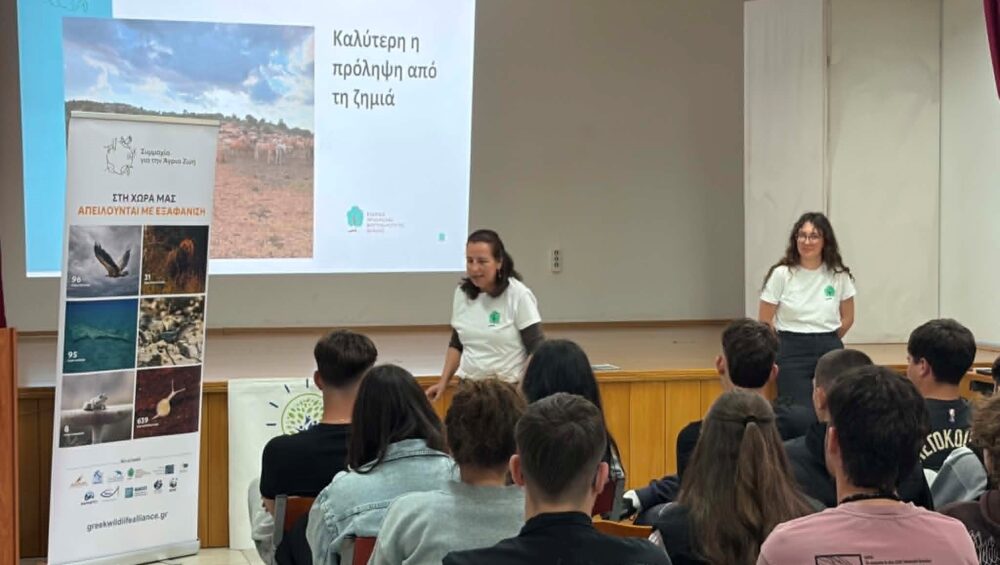
“Prevention is better than damage” was the message of this year’s school informative campaign, which aimed to highlight the importance of prevention in avoiding damage to farmers’ crops caused by wildlife (mammals and birds). Preventive measures reduce damage and benefit producers, on the one hand because they avoid losses of agricultural products, and on the other because they do not have to spend time chasing wild animals—whether to scare them off or to kill them—in the latter case, forcing them to break the law. Farmers who take preventive measures are leading the way in protecting biodiversity in their region.
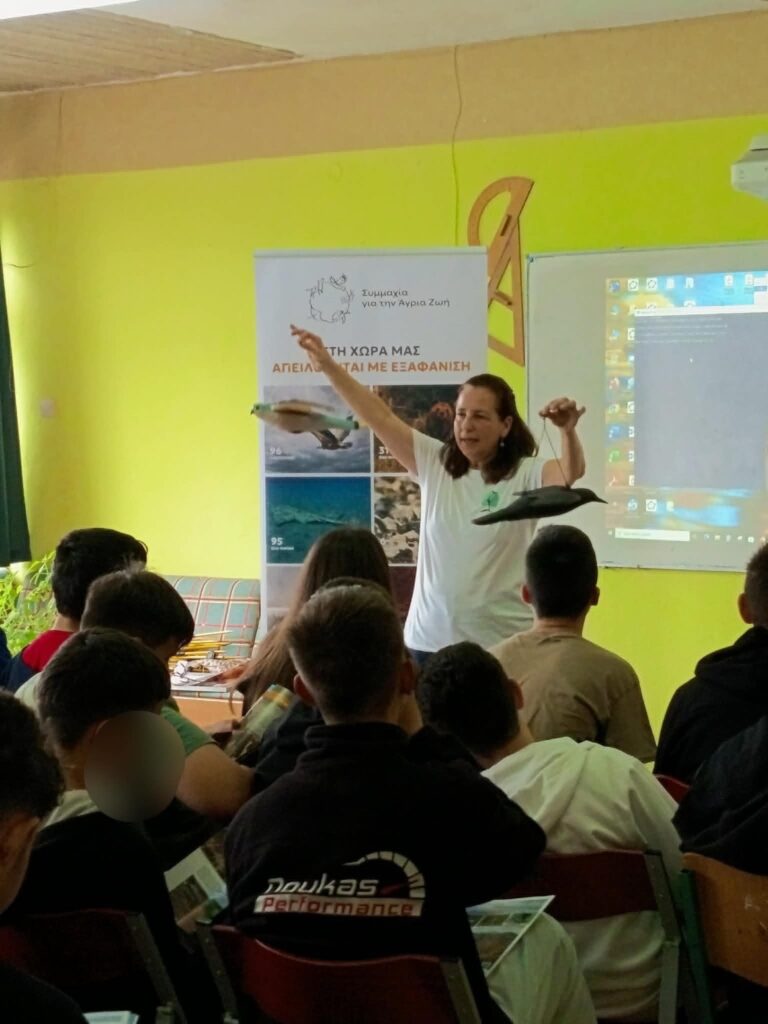
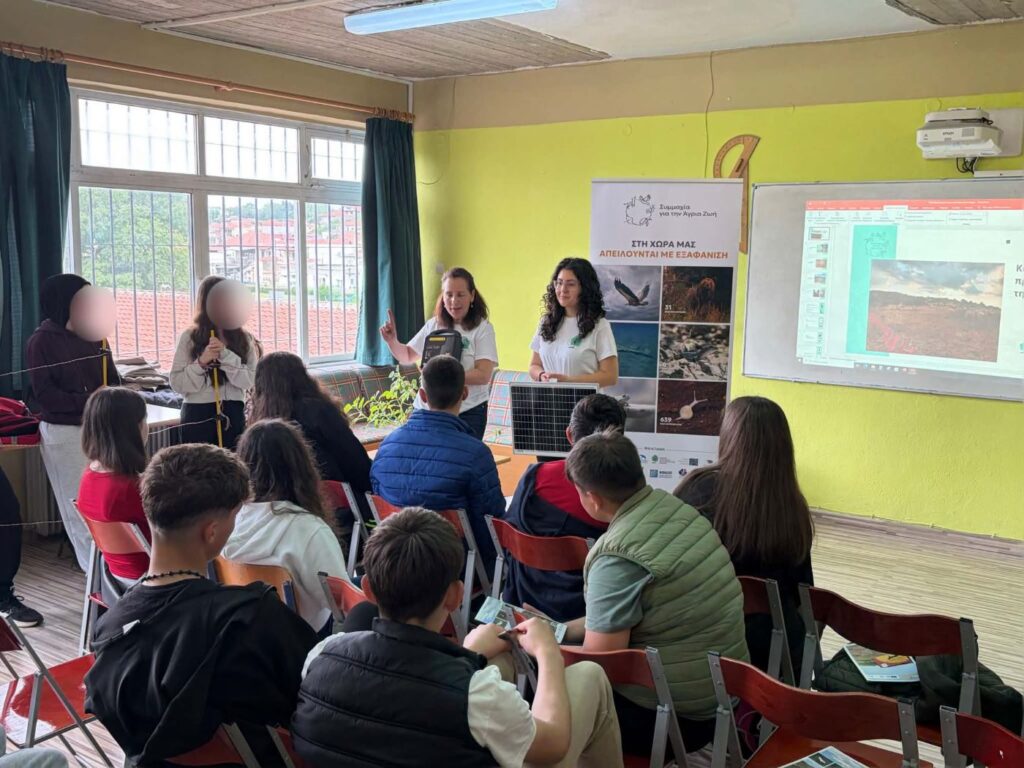
The educational session in each classroom lasted two class periods and included a presentation and one interactive game in the classroom that simulated the use of preventive measures. A total of 11 schools participated, with 329 students and 41 teachers from the Evros and Rodopi prefectures.
With the help of the students, who contributed according to their level of knowledge, the presentation highlighted the damage that can be caused by wild animals such as wolves, jackals, stray dogs, wild boars, foxes, bee eaters and corvids, but also their ecological role in controlling populations of rodents, insects, and birds that, in turn, cause damage to agricultural production. Next, preventive measures were presented, starting with simple traditional methods and moving on to more effective measures that utilize technology, such as visual and acoustic wildlife deterrent systems, nets to protect fruit crops from birds, fencing, and shepherd guard dogs. The discussion also covered two human activities that contribute to the growth of populations of animals that cause damage. The first issue concerns the indiscriminate disposal of dead pets or farm animals in streams or illegal dumps, which serve as easy food for wild animals, resulting in an increase in their population and causing them to venture closer and closer to settlements, thereby simultaneously increasing the damage they cause. The second issue concerns the “misguided” love for animals, which leads some people to systematically feed wild mammals, either because they believe the animals are hungry or to take nice photos. However, this practice results, on the one hand, in these animals becoming accustomed to humans and, on the other hand, in their population multiplying, thus turning an act of love for animals into a chain of problems. Finally, we discussed the consequences of the illegal use of poisoned baits to kill wild animals.
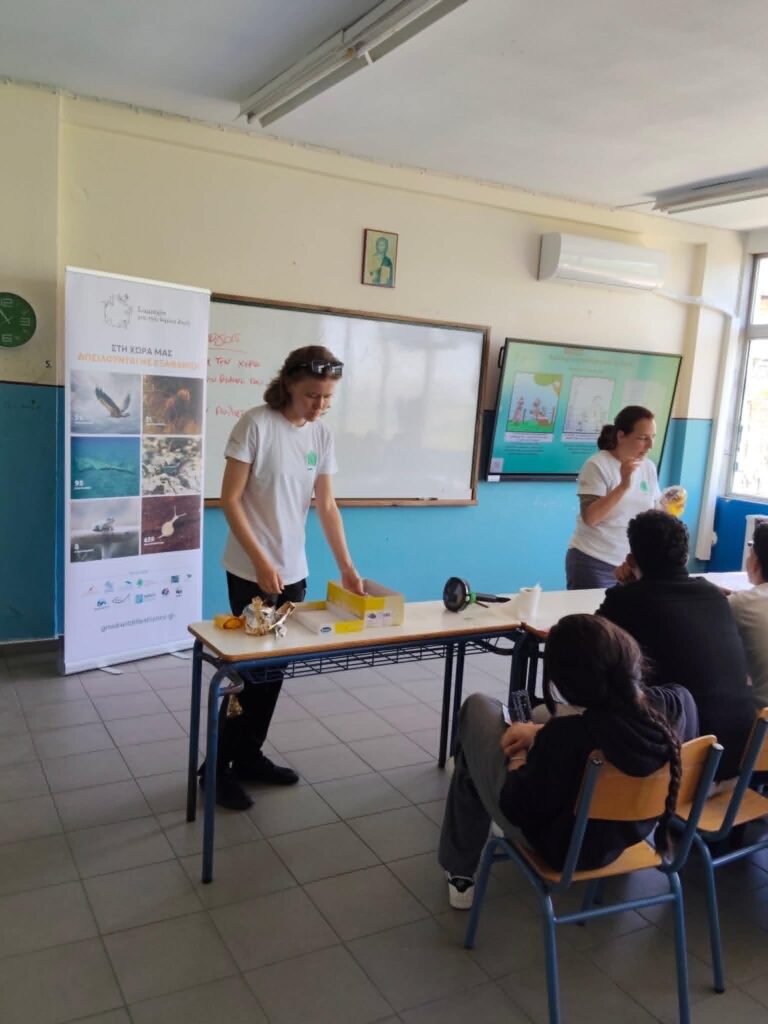
In interactive game students had the opportunity to see the sound and lighting deterrent systems up close and to set up a fladry fence (behavioural fence) and an electric fence (without a power supply!) right there on the spot. Playing the role of farmers, they saw the materials firsthand, and we discussed how they work and their effectiveness.
We reached out to schools located near rural areas, and we hope that this information will raise awareness among the children—and, by extension, their families—about this shift in mindset, with an emphasis on prevention rather than necessarily killing or poisoning wild animals.
We would like to extend our heartfelt thanks to the directors and teachers who honored us to collaborate with their schools, specifically: The General Lyceum of Iasmos, the High School and General Lyceum School of Intercultural Education in Sapes, the Model Professional Lyceum of Alexandroupoli, the High Schools and General Lyceum Schools of Tychero and Soufli, the High School of Lavara, and the High School with Lyceum Classes of Metaxades. We would like also to thank Joana Plandiura, Emma van der Marel, Valeria Bigone and Lolita Beyze, volunteers with the European Solidarity Corps, for their support with the interactive part of the event.
The action implemented in the framework of the "Greek Wildlife Alliance" an initiative implemented with the support of WWF in cooperation with 11 Greek environmental NGOs with a common vision of the well-being of wildlife and humans.
 EN
EN  EL
EL