
14 years of action against poisoned baits. Can we look to the future with optimism?;
COINTHE ANNOUNCEMENT
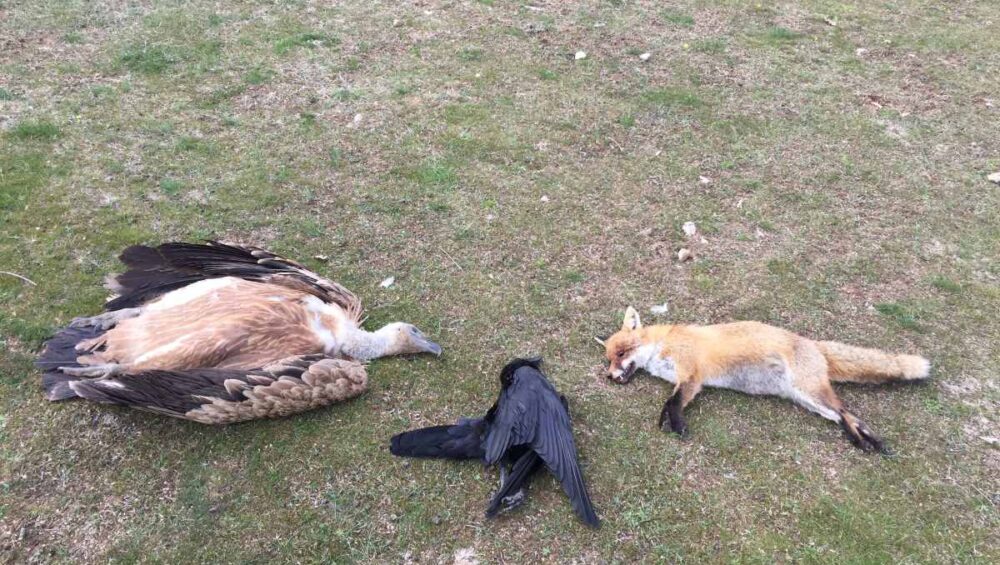
The 22α February 1 has been established as the "National Day of Action against Poisoned Baits", as a reminder of the tragic incident that occurred on the same day in 2012, when a poisoned animal carcass led to the extinction of an entire colony of vultures and the population of the Golden Eagle of the Nestos Straits.
Although the use of poisoned baits has been illegal since 1993, it is still unfortunately a common practice in the Greek countryside. The target of poison baits are mainly wild animals (bear, wolf, jackal, wild boar, badger, fox, ferret), either as an act of self-justification after some damage has been caused to agricultural production or livestock, or as a way of avoiding such damage. There are also many cases related to revenge and personal disputes between animal owners and land users in a specific area, with the victims being working dogs (sheepdogs, hunting dogs, truffle dogs). As both the baits themselves and the poisoned animal carcasses can be consumed by scavengers, species such as the Vulture, the White-tailed Eagle, the Golden Eagle, the Black Vulture, etc. are ultimately killed.
14 years after the incident in the Nestos Straits, what have we achieved as a country and what still needs to be done to address this critical threat to rural life?;
In the same year that the mass poisoning incident occurred in the Nestos Straits, seven environmental organizations and institutions joined forces, creating the National Task Force Against Poison Baits: ANIMA, ARCTURUS, Greek Society for the Protection of Nature, Greek Ornithological Society, Callisto, Natural History Museum of Crete, WWF Greece (later, the Thrace Biodiversity Protection Society was added to the Group).
The National Task Force Against Poison Baits made a collective effort to gather information on poisoning incidents in the countryside, creating the first wildlife poisoning database, covering the entire Greek territory. The data revealed a shocking number of poisoning incidents, with devastating consequences for protected species of carnivorous birds and mammals. During the period 2012–2024 alone, 888 poisoning incidents were recorded, leading to the death of at least 1,393 animals, including six Egyptian Vultures – the most endangered bird species in Greece – 19 Golden Eagles and at least nine Brown Bears. In addition, it was revealed that highly toxic pesticides, some of which have been banned in Europe since 2008, such as Carbofuran, are still being deliberately used to poison animals.
In 2014, ORNITHOLOGIKI and WWF Hellas created the first Anti-poison Dog Units with specially trained dogs in Greece (in the Meteora and Thrace regions respectively) and actively began searching for and recording incidents of wildlife poisoning. Today, due to the teams' apparent success, both in the field and in terms of communication, There are over 12 Anti-poison Dog Units operating in Greece., six of which are operated by NECCA and are the first to be operated by a competent public service, a step of great importance in the fight against this crime. The rest are operated by Environmental Organizations and Hunting Clubs.
The Working Group continued to push for a better legal framework to address wildlife poisoning, resulting in the Ministry of Environment and Energy publishing a Ministerial Decision in September 2018 to create a Local Action Plans against wildlife poisoning throughout the country. This was an important step, as it was the first legislation dedicated exclusively to the issue, however it soon became apparent that it was not effective in practice, as there were gaps in the responsibilities of the authorities involved. In 2022, new legislation came to fill these gaps in the form of Joint Ministerial Decision (JMD) between the Ministries of Environment and Energy, Rural Development, Interior and Citizen Protection, but again it was not addressed successfully.
The member organizations of the Working Group have made a huge effort to work at the local level in order to address problems at their source, such as conflicts between land users and predators. provision of predator deterrent tools (electric fences, scare lights, behavioral fences), the provision of herd guard dogs and first aid kits, the creation of Stakeholder and Land User Networks against poisoned baits, the training of competent authorities and the implementation of extensive national information and awareness campaigns are best practices that were implemented in various poisoning "black spots" in the country.
Despite all efforts, several actions and improvements still need to be made to effectively address wildlife poisoning:
– The Joint Ministerial Decision on the control of the illegal use of poisoned baits on wildlife species needs amendments in order to to clearly define the responsibilities of each service and fill gaps, such as the list of veterinarians authorized to perform necropsies and collect samples.
– The National Committee against Wildlife Poisoning, provided for in the Joint Ministerial Decree, has never met (!), even though the Joint Ministerial Decree stipulates annual meetings.
– Although field research has improved, mainly thanks to the operation of the Anti-poison Dog Units, law enforcement authorities rarely continue the investigation, resulting in suspects not being questioned and cases rarely ending up in court.
– Per Region, there must be a minimum number of employees of the competent authorities who are fully trained and appropriately qualified to conduct the necessary investigations.
– Toxicological analyses must be carried out in a shorter time, to facilitate the investigation, while a full autopsy must also be performed.
– The judiciary must be properly informed and trained, so that it understands the importance of the cases that reach the courts and justice is delivered more effectively.
Time is not on our side and rural life cannot withstand any more losses...
The organizations Thrace Biodiversity Protection Society, Hellenic Ornithological Society and Kallisto are implementing actions to address the illegal use of poisoned baits within the framework of «"Wildlife Alliance"», with the support of WWF Greece.

 EN
EN  EL
EL