
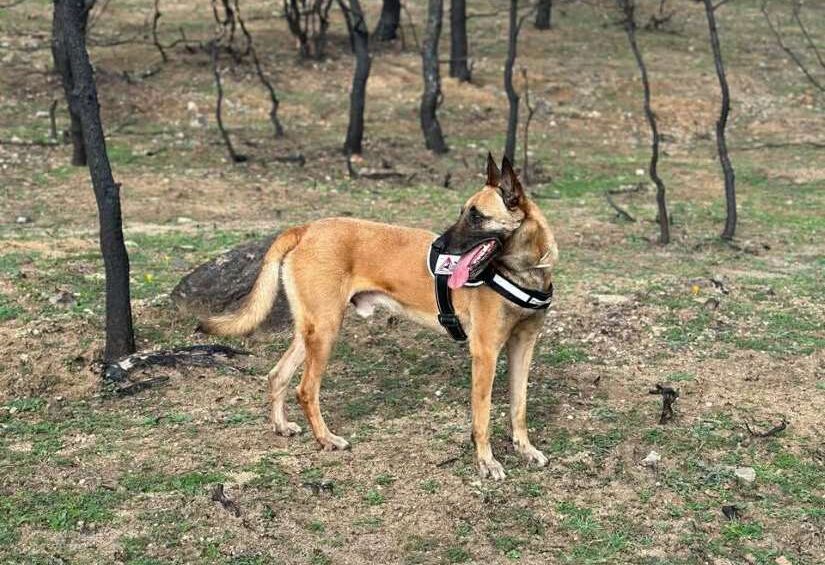
Joint patrols of the EMADD with competent services to combat poisoned baits in Thrace
Within the framework of the LIFE program "Restoration of the Black-tailed Vulture population and its food chain in the cross-border area of Bulgaria-Greece (LIFE23-NAT–BG–LIFE Rhodope Vulture)", systematic joint patrols are being implemented to identify and remove poisoned baits and dead animals, with the aim of protecting the endangered vultures of the region.
A central role in these actions is played by our Company's Special Poisoned Bait Detection Unit (EMADD), which is staffed by a specially trained dog, Dalton, and his handler. EMADD operates mainly in the Regional Units of Evros and Rodopi, in mountainous and semi-mountainous areas that overlap with areas of the Natura 2000 network, while pilot patrols are also implemented in the area of Stavroupoli, in the Regional Unit of Xanthi.
The patrols are carried out in close cooperation with the Forestry Services, the Protected Areas Management Units of OFYPEKA, as well as with the assistance of citizens, who immediately inform about possible poisoning incidents. The immediate response and coordination of all involved bodies prove to be crucial for the timely detection of poisoned baits and the prevention of further losses of wild and domestic animals.
In addition to controlling and cleaning the countryside, joint patrols also have a strong deterrent effect, as the regular presence of the competent services in the field acts as a deterrent to the use of poisoned baits. Particular emphasis is given to "high-risk" areas, where poisoning incidents have been recorded in the past, strengthening prevention and reducing the likelihood of this illegal practice recurring.
Since the start of the LIFE program (June 2024), approximately 50 joint patrols have been carried out, covering a total of 260 kilometers. In the context of these actions, four poisoning incidents were investigated, where several dead animals and poisoned baits were found. Three of the incidents were of a mass nature, which necessitated cooperation with two additional EMADDs of OFYPEKA. The remaining patrols were of a preventive nature in high-risk areas for "foles" and took place in coordination with the Forest Departments of Didymoteicho and Stavroupoli in their areas of responsibility.
The effective response to poisoning incidents and the prevention of new incidents rely largely on the close and continuous cooperation of all relevant services. Coordination between the Forest Services, the Protected Areas Management Units, the National Wildlife Protection Agency and other involved bodies is a decisive factor for the success of actions and the effective protection of wildlife.


 EN
EN  EL
EL