The Invisible Threat to the Pine Forests of Dadia–Lefkimi–Soufli Forest National Park
During the summer of 2025, we observed several unburned pine trees (Pinus brutia, Pinus nigra) showing brown needles on their branch tips. This sight raised important questions, which we decided not to leave unanswered.
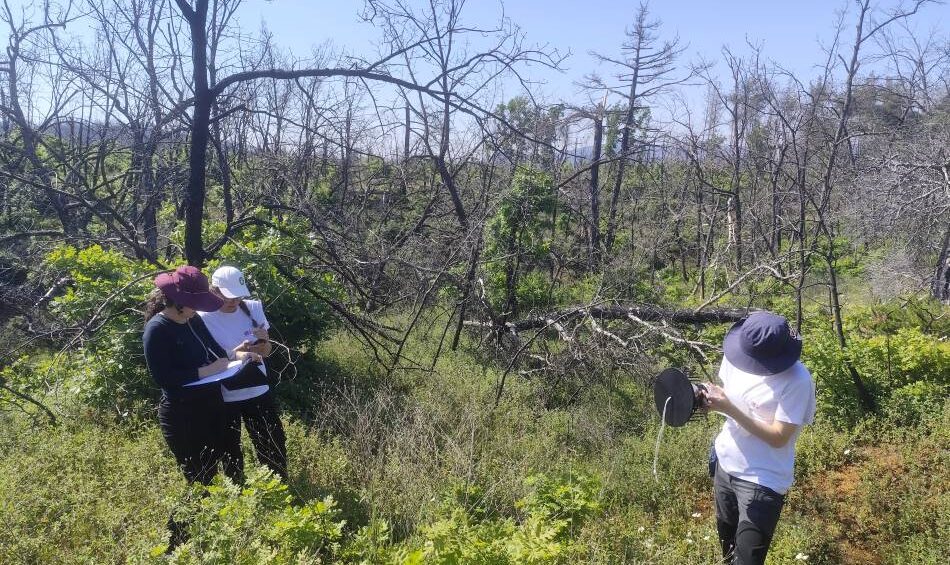
We invited Dr. Dimitrios Avtzis, Research Director at the Forest Research Institute (ELGO–DIMITRA), who conducted a field sampling inspection in order to assess the condition of the pine trees. The results confirmed our concerns, as the dieback (brown needles) observed on the branch tips was found to be caused by the presence of bark beetles belonging to the subfamily Scolytinae.
Bark beetles initially target weakened trees, affected by disturbances such as drought and wildfires. Through chemical signals (pheromones), they attract additional individuals of the same or related species, eventually leading to the complete infestation of the tree. Once their population increases sufficiently, they are capable of attacking even healthy trees, gradually creating clusters of dead and dried trees within the forest.
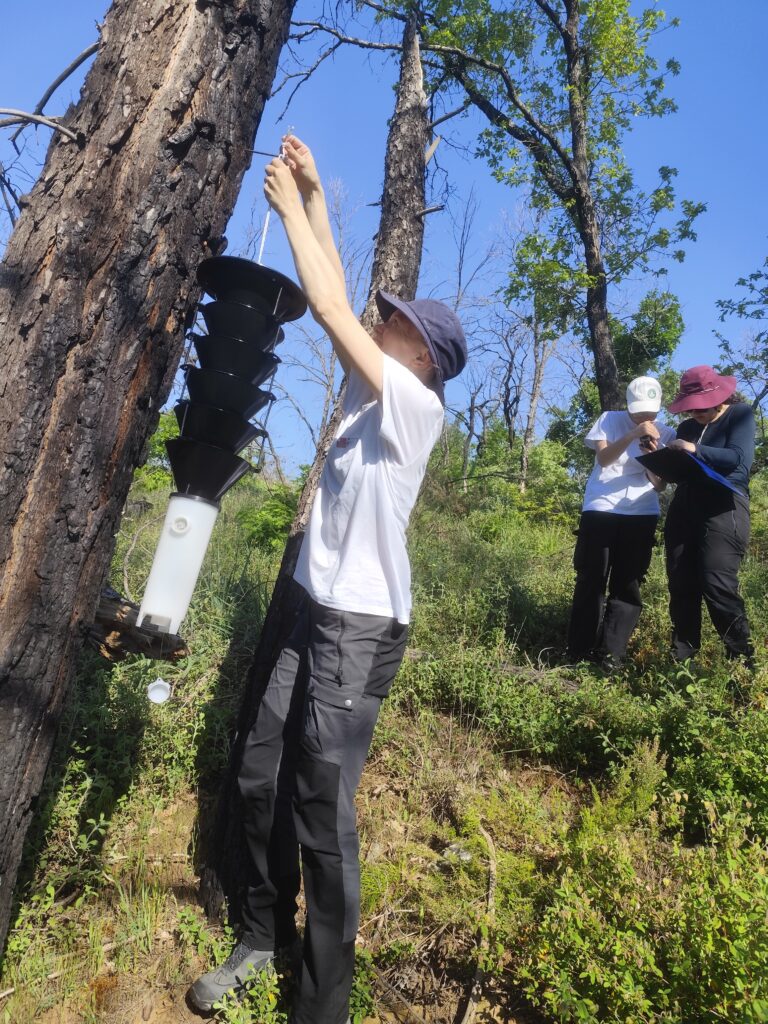
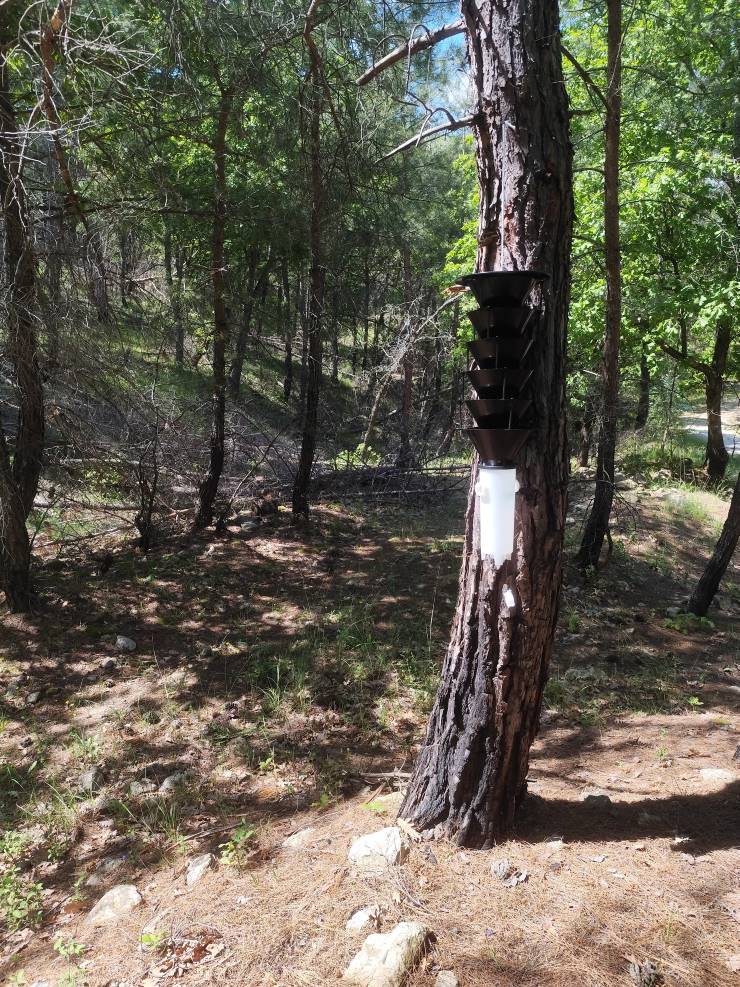
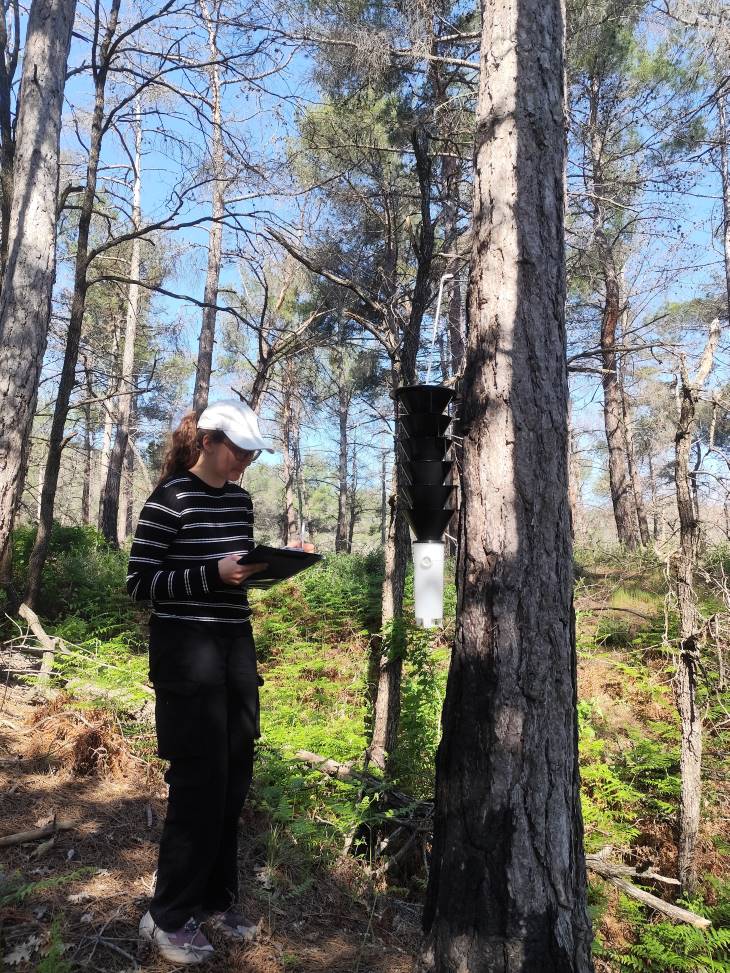
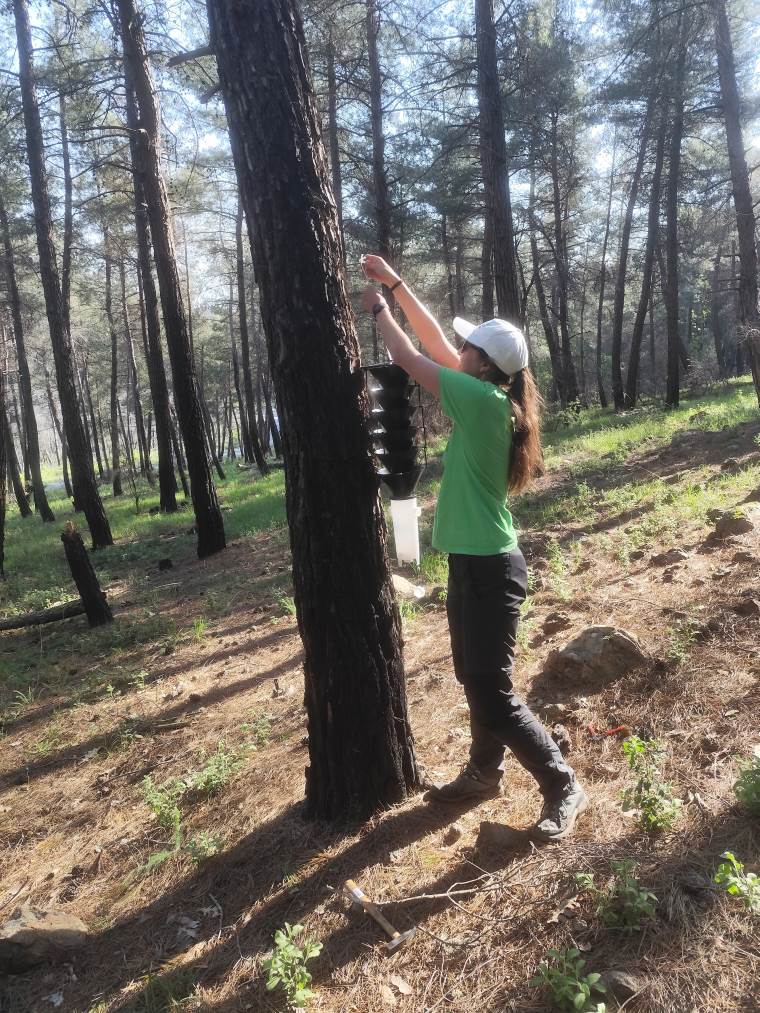
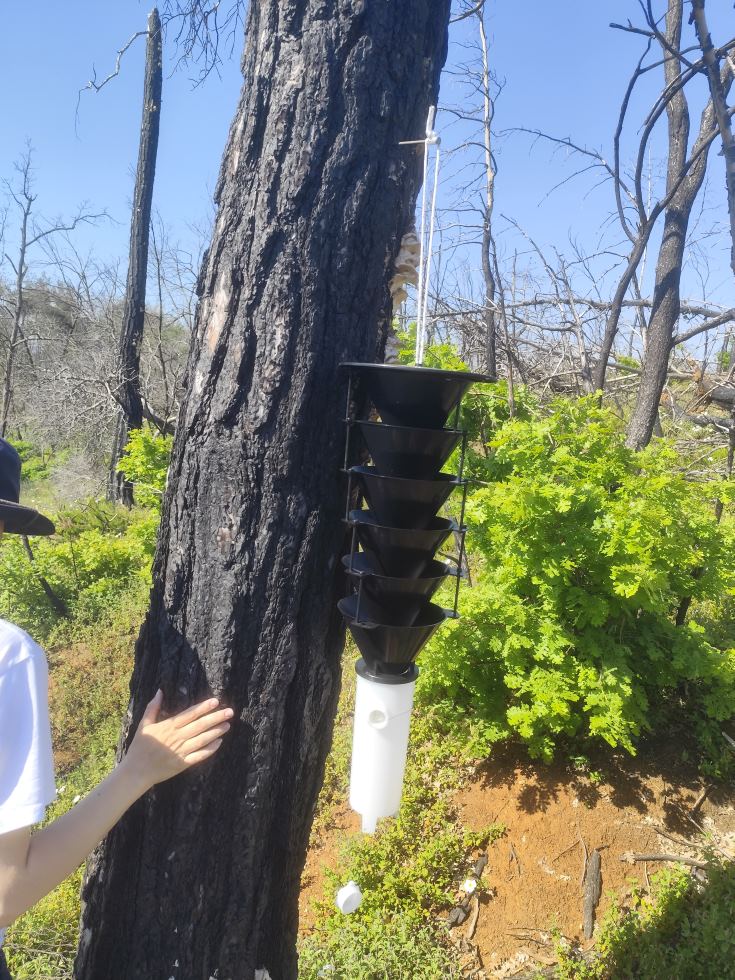
In collaboration with the Forest Research Institute, SPBT proceeded with the installation of a network of insect traps aimed at the systematic and long-term monitoring of species, population levels, and distribution patterns, in order to assess the extent of the phenomenon. The traps were placed in three categories of sites: living forest stands, burned areas, and the transitional zones between them, with a minimum distance of 400 meters between traps. Each trap contains a special attractant substance, which is renewed approximately every 45 days.
The collected insect samples will be sent to the Forest Research Institute for further analysis and the preparation of the relevant research report. We hope that the results of the study will be available by the end of this year.
We use cookies to give you the best possible experience on our site. If you continue to use the site, we will assume that you agree to this. Privacy policyΑΠΟΔΟΧΗΑπόρριψη
Privacy & Cookies Policy
Privacy Overview
This website uses cookies to improve your experience while you navigate through the website. Out of these, the cookies that are categorized as necessary are stored on your browser as they are essential for the working of basic functionalities of the website. We also use third-party cookies that help us analyze and understand how you use this website. These cookies will be stored in your browser only with your consent. You also have the option to opt-out of these cookies. But opting out of some of these cookies may affect your browsing experience.
Necessary cookies are absolutely essential for the website to function properly. These cookies ensure basic functionalities and security features of the website, anonymously.
Cookie
Duration
Description
cookielawinfo-checkbox-analytics
11 months
This cookie is set by the GDPR Cookie Consent plugin. The cookie is used to store the user consent for the cookies in the "Analytics" category.
cookielawinfo-checkbox-functional
11 months
The cookie is set by GDPR cookie consent to record the user consent for the cookies in the "Functional" category.
cookielawinfo-checkbox-necessary
11 months
This cookie is set by the GDPR Cookie Consent plugin. The cookies are used to store the user consent for the cookies in the "Necessary" category.
cookielawinfo-checkbox-others
11 months
This cookie is set by the GDPR Cookie Consent plugin. The cookie is used to store the user consent for the cookies in the category "Other.
cookielawinfo-checkbox-performance
11 months
This cookie is set by the GDPR Cookie Consent plugin. The cookie is used to store the user consent for the cookies in the "Performance" category.
viewed_cookie_policy
11 months
The cookie is set by the GDPR Cookie Consent plugin and is used to store whether or not the user has consented to the use of cookies. It does not store any personal data.
Functional cookies help to perform certain functionalities like sharing the content of the website on social media platforms, collect feedbacks, and other third-party features.
Performance cookies are used to understand and analyze the key performance indexes of the website which helps in delivering a better user experience for the visitors.
Analytical cookies are used to understand how visitors interact with the website. These cookies help provide information on metrics the number of visitors, bounce rate, traffic source, etc.
Advertisement cookies are used to provide visitors with relevant ads and marketing campaigns. These cookies track visitors across websites and collect information to provide customized ads.

 EN
EN  EL
EL