International project to protect the Egyptian Vulture in the Balkans
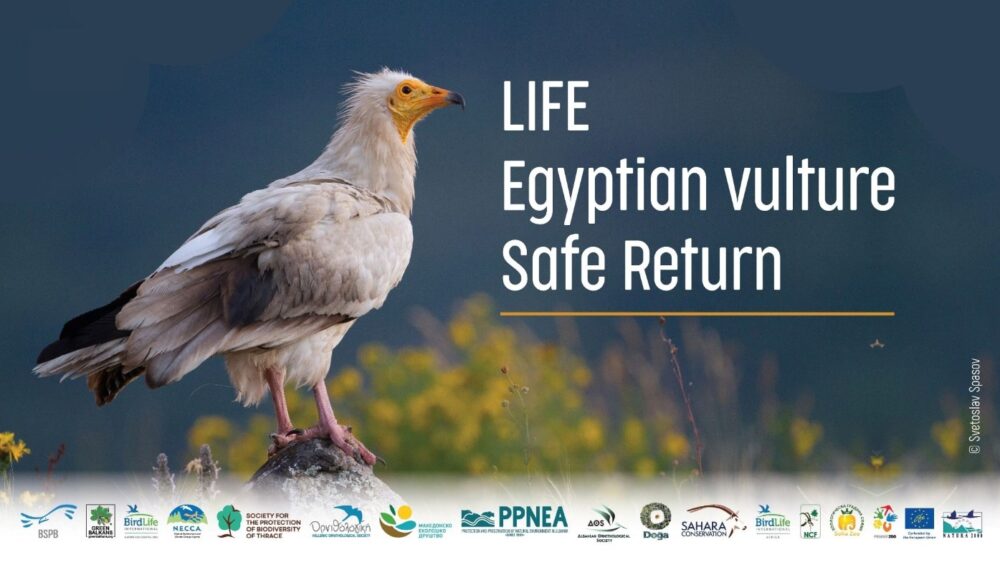
Today, on World Migratory Bird Day, the Society for the Protection of Biodiversity of Thrace announces the launch of the international LIFE EV Safe Return project, co-funded by the European Union. Bringing together 15 organisations and institutions from Europe, the Middle East and Africa, the project aims to protect the endangered Egyptian vulture and support the recovery of its population by strengthening conservation efforts across its breeding grounds, migration routes and wintering areas in Africa.
A Dangerous Journey of More Than 5,000 Kilometres
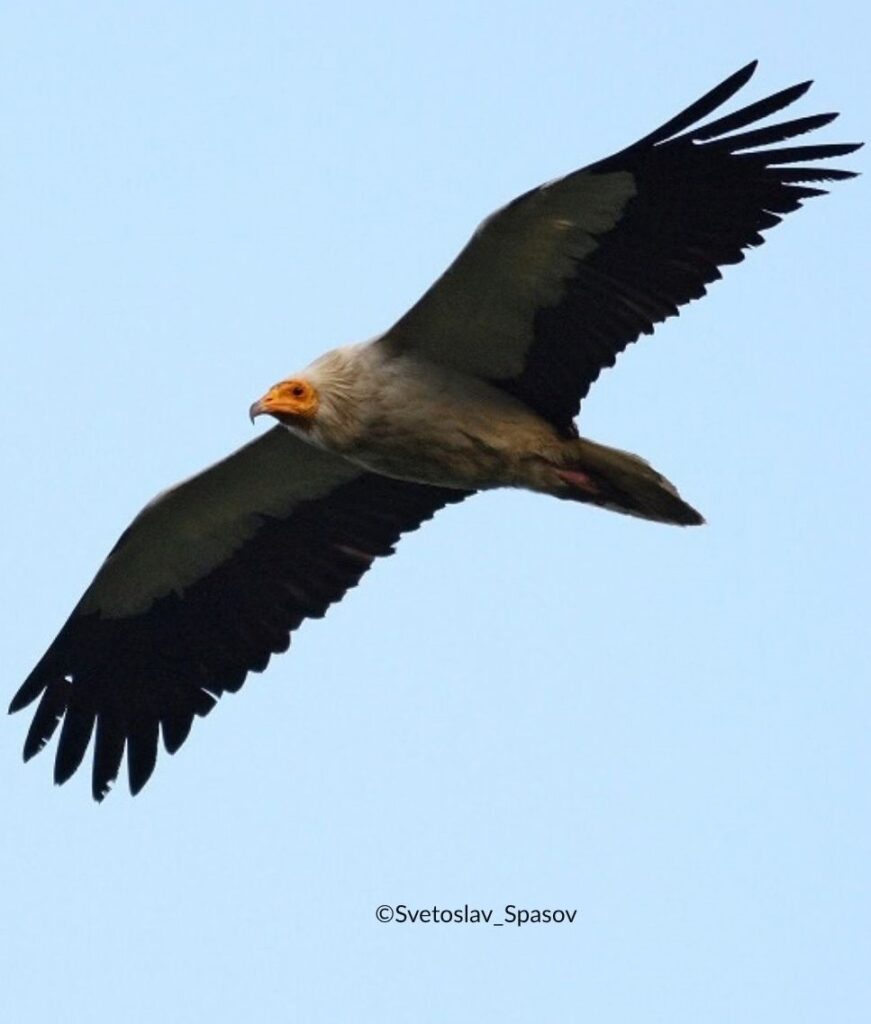
Every autumn, Egyptian vultures leave the Balkans and travel more than 5,000 kilometres to reach their wintering grounds in Africa. Along the way, they face serious threats, including poisoned baits, poaching, electrocution on unsafe power poles and illegal killing linked to belief-based practices.
An Umbrella Species for Flyway Conservation
Protecting the Egyptian vulture throughout its migratory route is crucial, as conservation measures targeting the species can also benefit other migratory birds facing similar threats.
Only 50 Breeding Pairs Remain in the Balkans
Today, only around 50 breeding pairs remain across Bulgaria, Greece, North Macedonia and Albania. After more than three decades of population decline, recent years have brought signs of stabilisation in the Balkan population, while numbers in Bulgaria have begun to increase. This progress reflects sustained collaboration between conservation organisations, public authorities and local communities.
LIFE EV Safe Return: Conservation Efforts Until 2031
Running until 2031, LIFE EV Safe Return will build on successful conservation measures, expand the geographical scope of existing interventions and introduce innovative approaches to address the threats facing the species. The project also builds on the work of the Egyptian Vulture New LIFE project, which received the LIFE Citizens’ Prize at the 2026 LIFE Awards.
The project will focus on preventing wildlife poisoning, reducing the risk of electrocution, tackling poaching and illegal killing, providing safe food and ensuring rapid responses to incidents that threaten the species. Connecting conservation teams across countries will strengthen their ability to identify threats and protect birds throughout their annual migratory cycle.
In Greece and Bulgaria, at least 40 Egyptian ωultures bred in European zoos or rescued from the wild will be released into their natural habitat. GPS transmitters will enable the birds’ movements to be tracked across national borders and help identify high-risk areas.
The long-term recovery of the Egyptian vulture also depends on the involvement of local communities. The project will work with livestock farmers, hunters, veterinarians, teachers and local authorities to prevent threats, provide safe food and protect breeding areas. In addition, educational activities in five countries will engage more than 4,000 pupils, teachers and young people involved in nature conservation.
A Symbol of Nature and Tradition
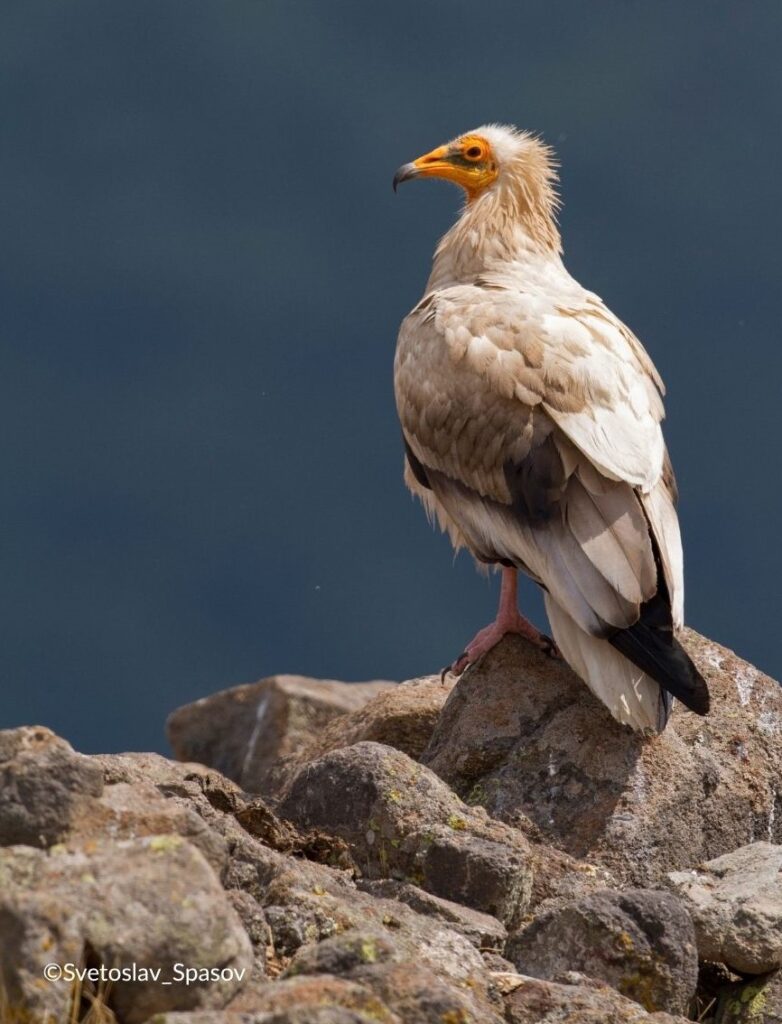
With its distinctive and easily recognisable appearance, the Egyptian vulture has been associated with the Greek countryside for centuries, holding a special place in myths and traditions. At the same time, it plays a valuable ecological role as nature’s natural cleaner, feeding on dead animals and helping maintain healthy ecosystems. Protecting the Egyptian vulture therefore means not only conserving an essential part of nature, but also preserving a living connection to our shared cultural heritage.
By bringing together people, organisations and institutions across three continents, LIFE EV Safe Return aims to ensure that this remarkable bird of prey can continue its long migratory journeys and return safely to the Balkans.
About the project
LIFE EV Safe Return is coordinated by the Bulgarian Society for the Protection of Birds (BSPB/BirdLife Bulgaria)in partnership with Society for the Protection of Biodiversity of Thrace, the Hellenic Ornithological Society, the Natural Environment and Climate Change Agency (NECCA), the Green Balkans, BirdLife Europe and Central Asia, the Macedonian Ecological Society (MES), Protection and Preservation of Natural Environment in Albania (PPNEA), the Albanian Ornithological Society (AOS), DOĞA (Türkiye), Sahara Conservation (SCF), BirdLife Africa and the Nigerian Conservation Foundation (NCF). .
Associated partners are Sofia Zoo and Prague Zoo. The project is co-funded by the European Union’s LIFE Programme.
 EN
EN  EL
EL