The valonia oak of Evros
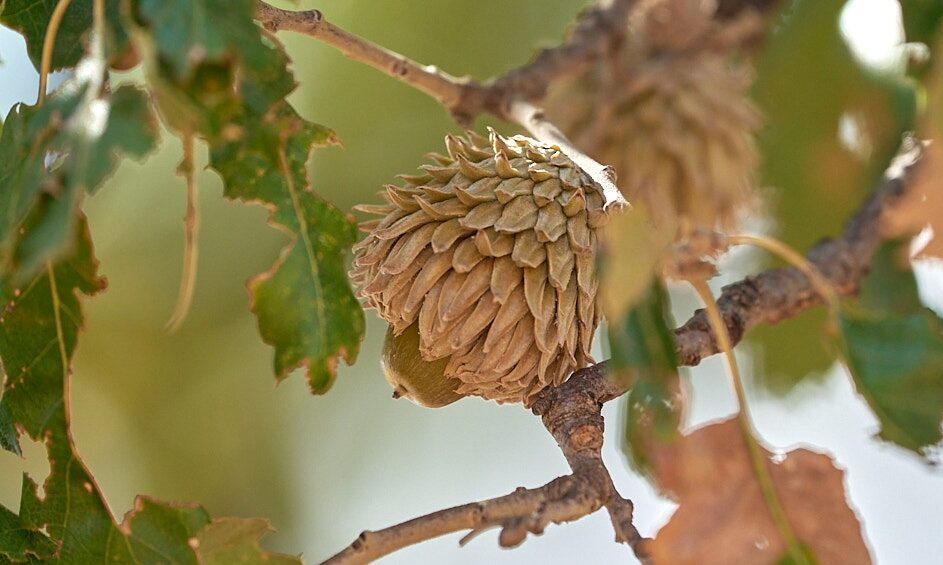
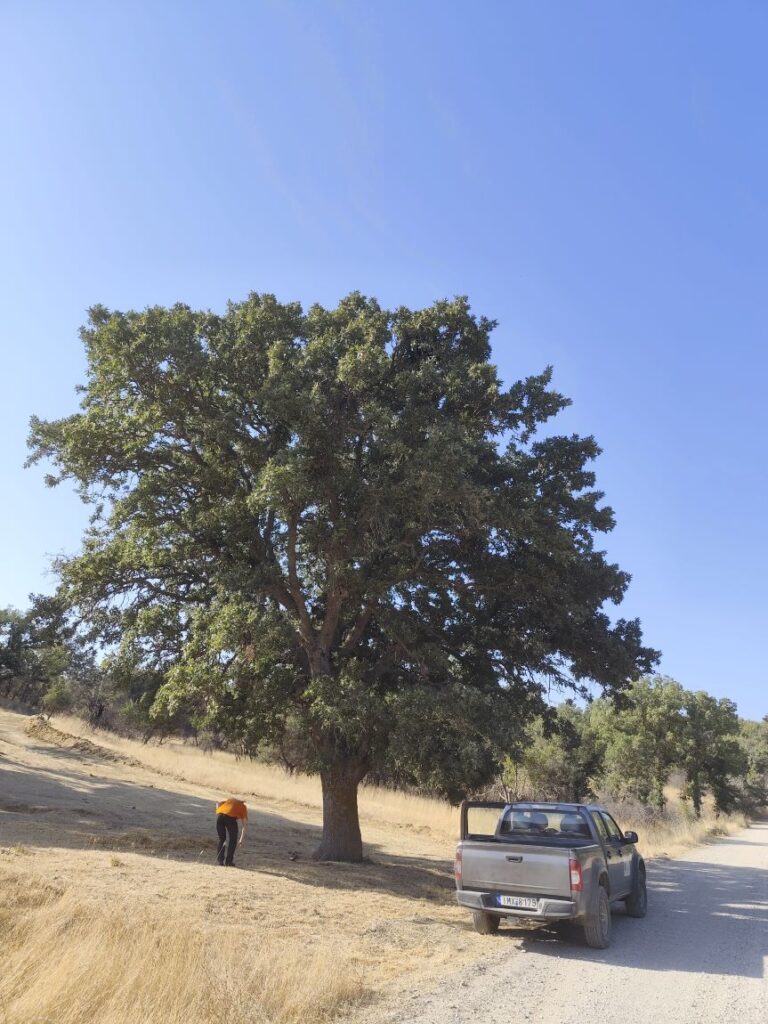
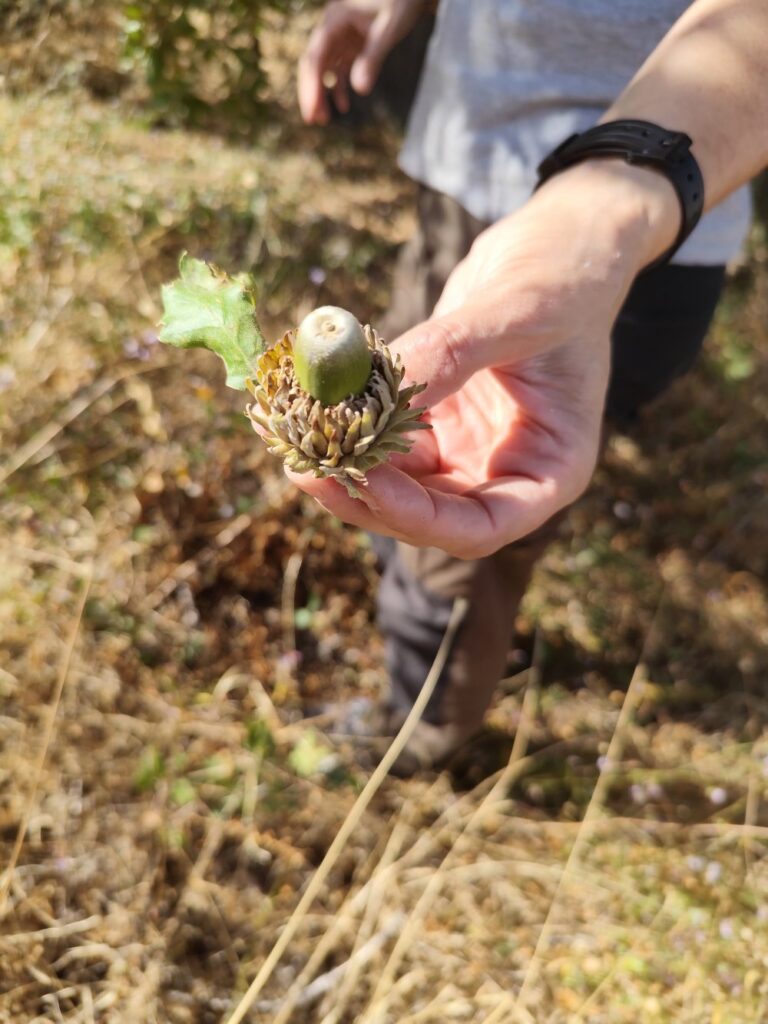
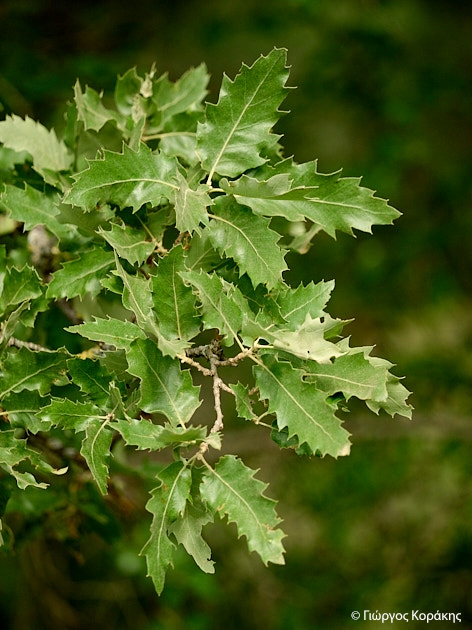
The valonian oak is a deciduous oak species that is resistant to drought and high temperatures. Often, depending on weather conditions and elevation, it sheds its leaves shortly before sprouting new ones, which is why it is also classified as semi-evergreen. It is a long-lived tree with a dense crown that reaches a height of 15–20 meters. It is easily distinguished from other oak trees by its leaves and large acorns. The leaves are narrow and lanceolate, downy, with distinctly triangular teeth along the margins. The acorn measures up to 4 cm and is enclosed in a characteristically large cup, up to 7 cm in diameter, which bears long scales on the outside that are sometimes curved outward.
Its scientific name is Quercus ithaburensis , and it is named after Mount Tabor (Thabor oak), where the species was first recorded in 1835. Its English name is Valonia oak, derived from the Italian name (Valona) for the port of Avlona (Vlora) in Albania, which was once the most important center for the export trade of acorns in the Mediterranean.
Quercus ithaburensis is a species of the eastern Mediterranean, with a distribution from southeastern Italy to Israel and Jordan in the east. In Greece, the subspecies macrolepis is found in lowland areas, as well as on some islands, often near the coastal zone, at an altitude usually up to 500 m, however it can reach 1200 m.
The valonia oak is a tree with multiple functions and uses. Scattered mature trees or sparse clusters have been preserved near settlements and constitute what are known as “woodland pastures” due to their traditional use for grazing. Acorns are used as animal feed (in the past, they have also served as a dietary supplement for humans), while the inner bark of the cup-shaped structure has a high content of tannins, which are valuable for tanning. The wood of the valonia oak is suitable for construction and tools, and it is also a firewood with high thermal efficiency.
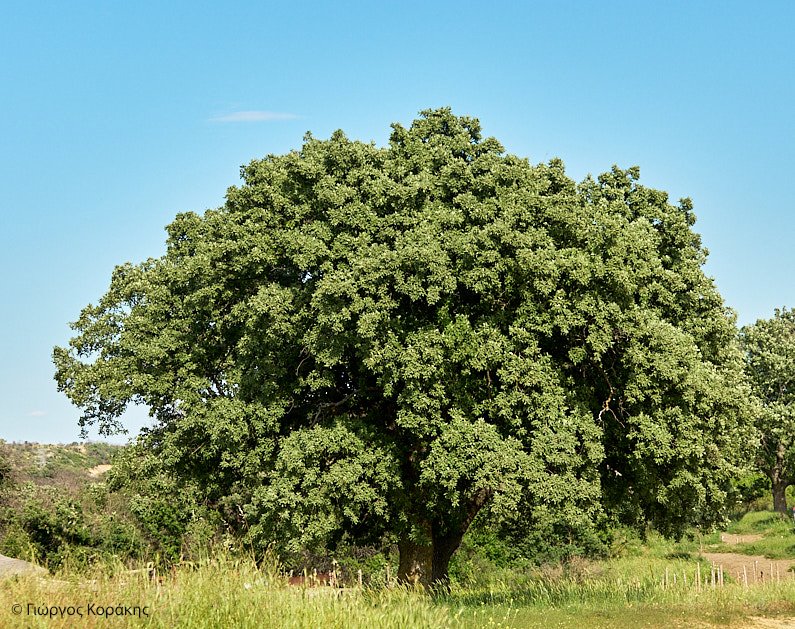
The open forests of this oak species, with their mature trees interspersed with clearings and meadows, constitute a habitat of particular importance for biodiversity. Today, they are included in the habitat type “Oak forests (Quercus macrolepis)” under Directive 92/43/EEC, with code 9350, and are protected.
Where the valonia oak trees are in Evros?
Mainly in the southern part of the prefecture, from Nipsa and southward across all the lowland areas of the villages that surround Alexandroupoli to the north. They stand out, scattered across the fields, majestic as monuments to a former rural way of life that depended on livestock farming, where animals were led into their shade for food and rest. Many oak trees survive in the northern part of Alexandroupoli in the fields, and many more within the military camps in the area. The valonia oak is linked to the history of Alexandroupoli, the capital of Evros, as its old name, Dede-Agats—which means “old tree,” “grandfather’s tree,” or “hermit’s tree”—refers to this species of oak. There are two theories regarding the origin of the name: a) from the ancient oak (Quercus ithaburensis subsp. Macrolepis) where the tomb of the Turkish Dedde was located, a wise dervish, who came into conflict with his superior, and spent most of his life in the oak tree and was eventually buried next to it and b) by the oak trees that shaded the beach (dedde-agatslar).
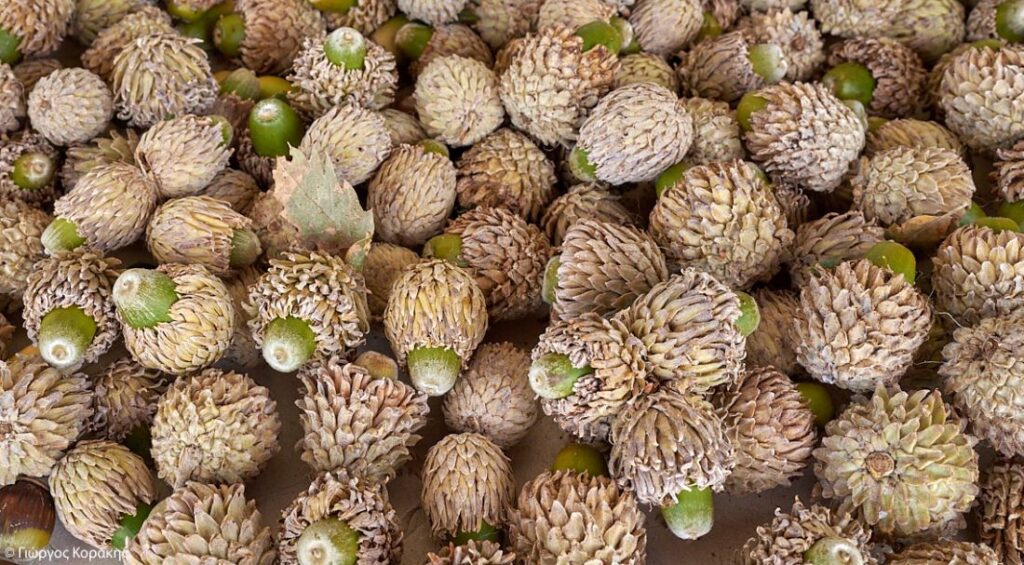
In seed collection program which began in 2025 with the aim of studying and recording the appropriate manipulations of propagating material of native species of the Evros Region, the tame oak was clearly on the list of species collected and sent to the Amygdaleza nursery for further manipulations. For such a historical and centuries-old species that is now limited to a few locations, efforts to rescue it and establish it in more populations in nature are worth it, as well as its reproduction and exploitation as an ornamental species that will ensure its viability. Of course, acorns are still food, if not for livestock that have been drastically reduced, but for wild animals such as wild boars. Their use in gastronomy has also been exploited, as for example flour with a low gluten content can be produced from them.
Sources:
- • Korakis, G. 2015. Forest Botany – Native Trees and Shrubs of Greece. Greek Academic Electronic Books and Aids. 620 pages.
- • https://el.wikipedia.org/wiki/
 EN
EN  EL
EL